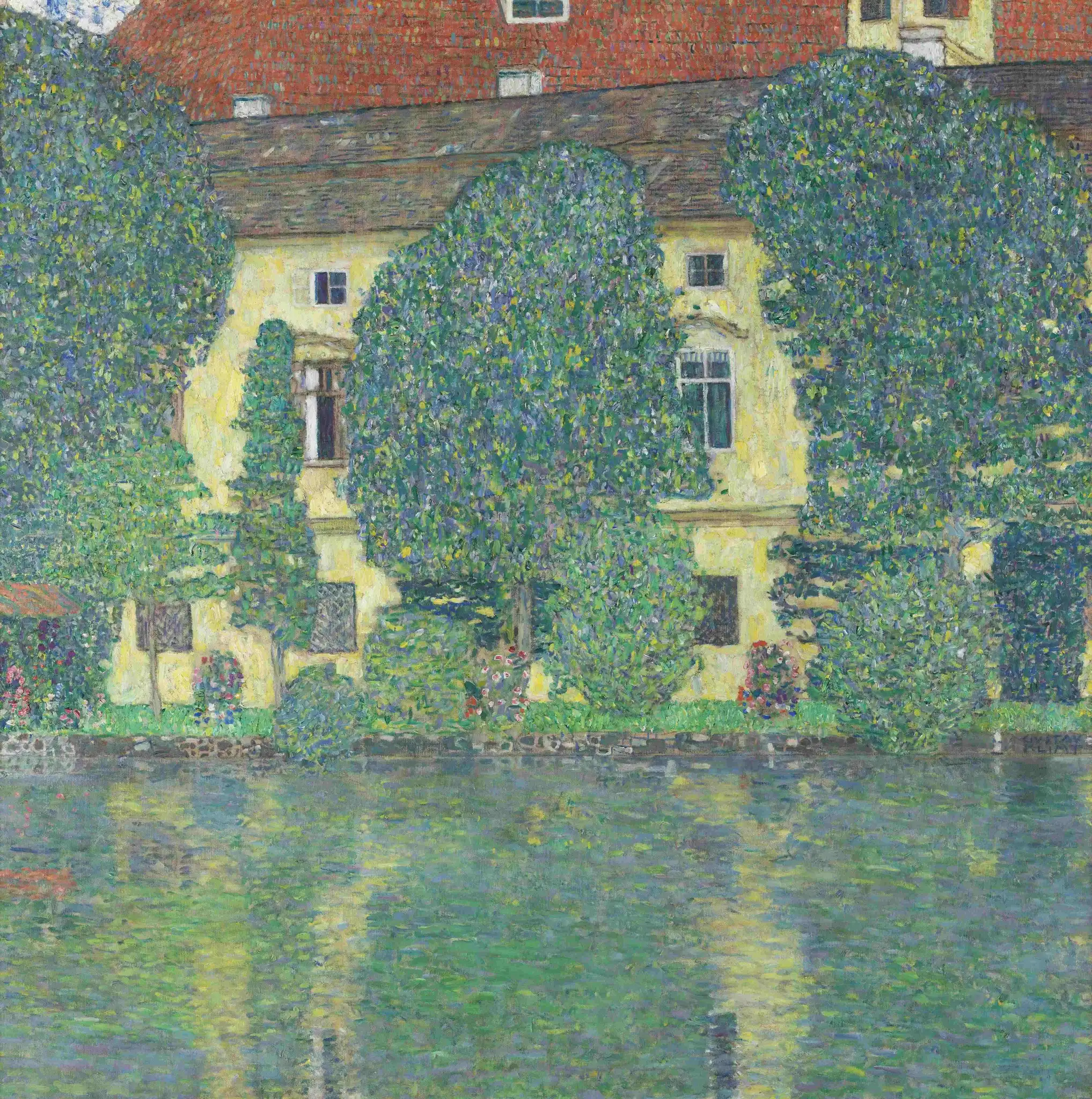
Gustav Klimt:
Kammer Castle on Lake Attersee III (Schloss Kammer am Attersee III), 1909/1910
Oil on canvas
110 × 110 cm
© Belvedere, Vienna
(Natter 190)
The Belvedere preserves a small note Klimt sent to his sister Hermine in 1915 from his summer stay at Lake Attersee: “Arrived safely, forgot opera glasses – urgently needed.” It’s a simple line, but it tells us something about how he worked. Klimt often used opera glasses or a telescope to study distant views across the lake. This painting shows exactly why. The lakeside façade of Schloss Kammer is brought close, as if seen through a lens: the trees, the low annex, and the red roof sit together in a single, flattened plane. Schloss Kammer is a moated castle in Schörfling am Attersee in Upper Austria, which explains its position right at the water’s edge and why Klimt could observe it so clearly from across the lake.
Klimt painted five views of Kammer Castle, returning to the subject with steady interest. Each version shifts the balance of distance and detail. The square format — typical of his landscapes — gives the scene a quiet, balanced feeling. Some writers once imagined him painting these works from a boat, but this has been convincingly dismissed. His own letters support the idea that he worked from the opposite shore, using a telescope to bring the building closer.
The painting also shows Klimt’s familiar Attersee palette: cool greens, soft blues, and surfaces that shimmer slightly, almost like small mosaics. This colour world became one of the signatures of his summer retreats, shaped by long hours of watching light move across the lake.
Landscape painting was what Klimt enjoyed most when he left Vienna. Away from portrait commissions and the pressures of the city, he settled into a slower rhythm. He painted only one figure work outside Vienna; everything else from his summer stays is a landscape. The Attersee paintings — and the Kammer Castle series in particular — reflect that sense of calm focus and the quiet pleasure he found by the water.
Leave a Reply