An Introduction
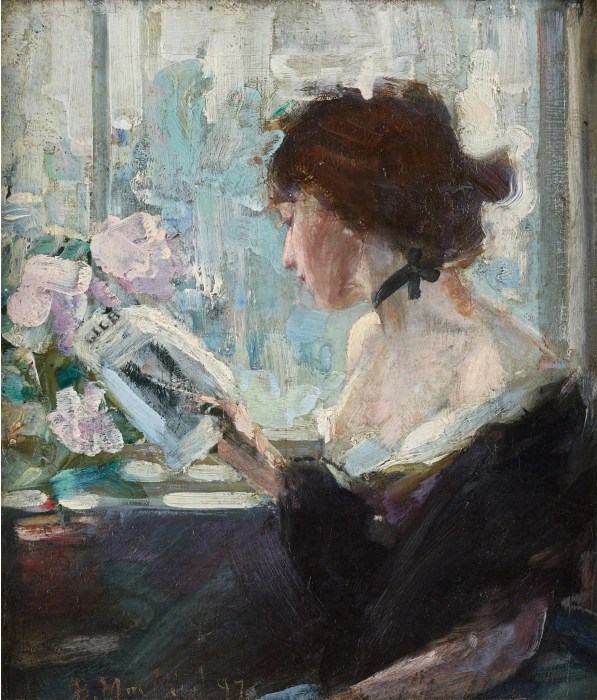
When we speak about the birth of modern art around 1890, our attention often turns to Vienna and the Secession, or to Munich, Berlin, and Paris — cities where Symbolism, Art Nouveau, and early Expressionism were taking shape. Yet at the very same moment, something remarkable was happening further north. In Scotland, Glasgow was experiencing its own artistic renaissance, and at the heart of it stood a group of extraordinarily talented women who would later be known as the Glasgow Girls.

The Glasgow School of Art — under the progressive leadership of Fra Newbery — became one of the few institutions in Europe where women could study, experiment, and build artistic careers at a professional level. This was radical for the time. Women were not only admitted; they were encouraged to pursue painting, illustration, textile design, metalwork, stained glass, book arts, and theatre design. Their work was not treated as secondary or decorative, but as a vital part of the emerging Glasgow Style, the Scottish contribution to the international Art Nouveau movement.
A Name with a Story
The term Glasgow Girls first appeared in the late 1960s, when curator William Buchanan used it to draw attention to the achievements of women artists associated with the Glasgow School of Art. But it was not until Judy Burkhauser’s landmark 1990 exhibition, Glasgow Girls: Women in Art and Design 1880–1920, that the name entered public consciousness. Her exhibition and catalogue restored these women to their rightful place in Scottish art history and cemented the term we use today.

A Flourishing of Female Creativity
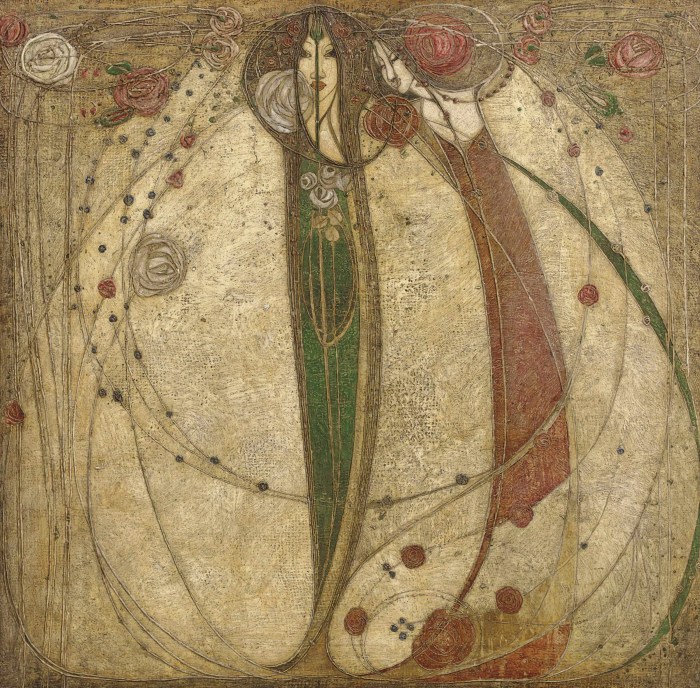
Between roughly 1885 and 1920, the Glasgow Girls produced work that was imaginative, technically accomplished, and often boldly modern. Some worked closely with the Glasgow Four — Charles Rennie Mackintosh, Margaret MacDonald, Frances MacDonald, and Herbert MacNair — whose ethereal Symbolism and linear elegance helped define the Glasgow Style. Others forged their own paths, drawing inspiration from Celtic revivalism, Japanese art, Pre-Raphaelitism, and the broader European currents of Jugendstil and Art Nouveau.
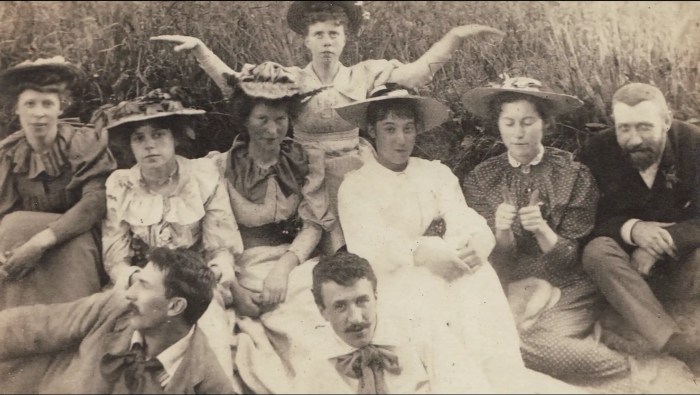
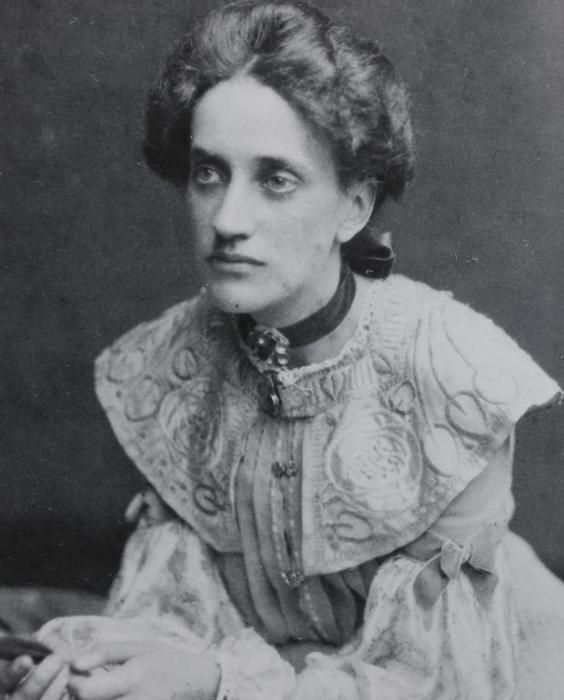
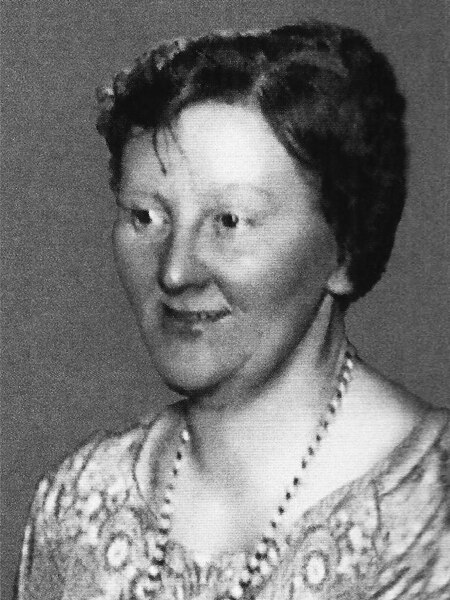
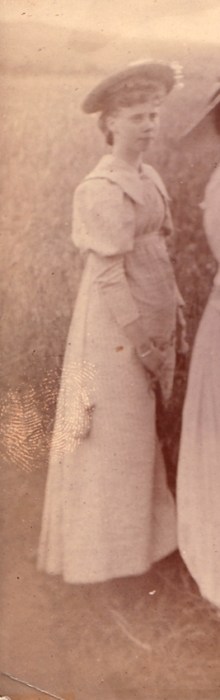
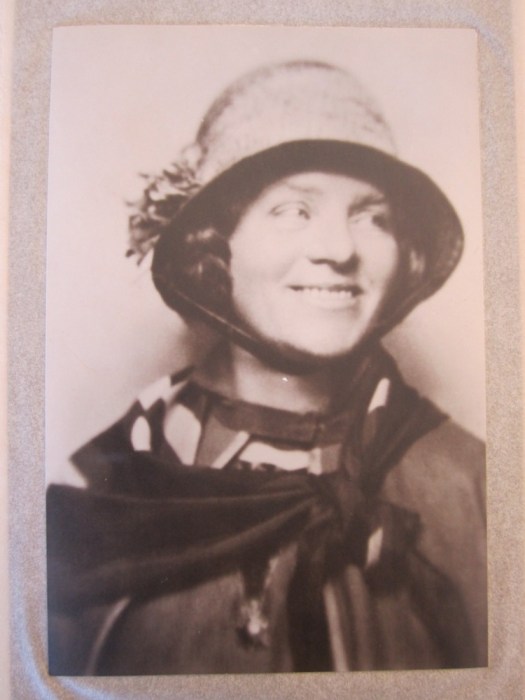
Frances Macdonald, Margaret Macdonald, Katherine Cameron, Janet Aitken, Agnes Raeburn, Jessie Keppie, John Keppie, Charles Rennie Mackintosh, Herbert MacNair
What united them was not a single aesthetic, but a shared environment:
- a school that valued applied arts as much as fine arts
- a city experiencing rapid industrial and cultural growth
- a network of women who supported one another’s ambitions
Their work travelled widely — to Turin, Vienna, Budapest, and beyond — helping to place Glasgow firmly on the map of European modernism.
Who Were the Glasgow Girls?
The term Glasgow Girls was coined long after the period itself, but it remains a useful way to describe the remarkable women who shaped the Glasgow Style and the wider artistic culture of the city between roughly 1885 and 1920.
The artists below are grouped into:
Core Glasgow Girls — consistently recognised in scholarship
Associated Artists — active in the Glasgow School orbit.
Below is a brief introduction to some of the most influential artists associated with the movement. Each brought something distinct to the Glasgow Style, and together they formed one of the most vibrant chapters in Scottish art history.
1. Core Glasgow Girls
Margaret MacDonald (1864–1933)
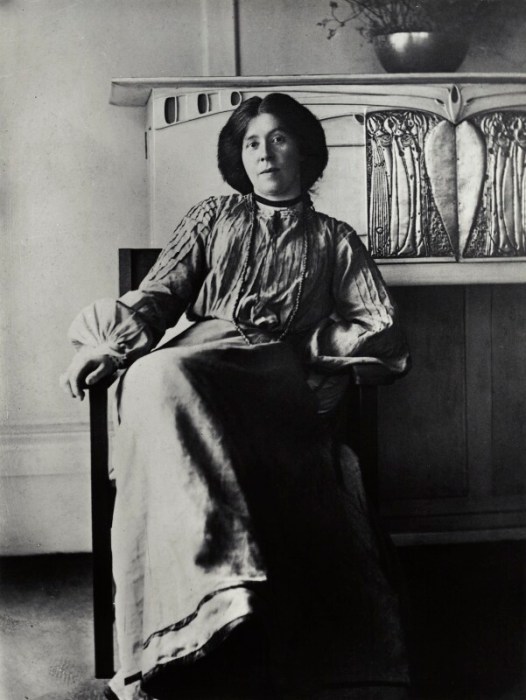
A central figure of the Glasgow Style, she created ethereal Symbolist compositions in gesso, metalwork, and watercolour. Her collaborations with Charles Rennie Mackintosh shaped the visual identity of early Scottish modernism.
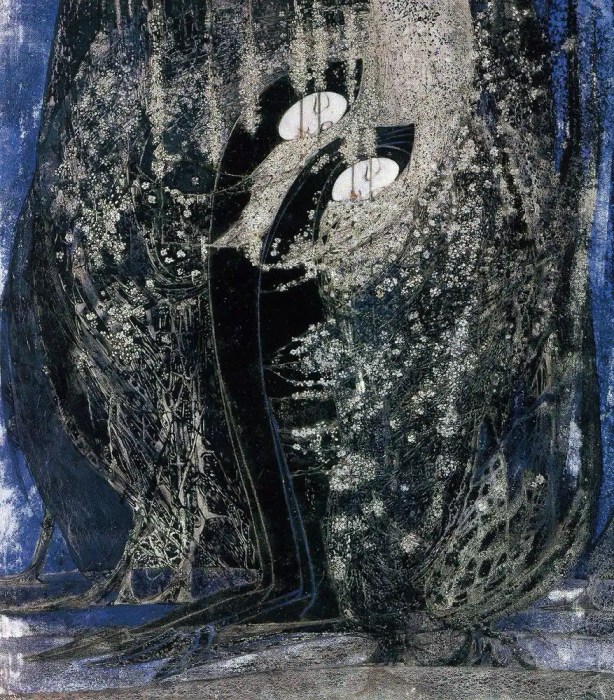
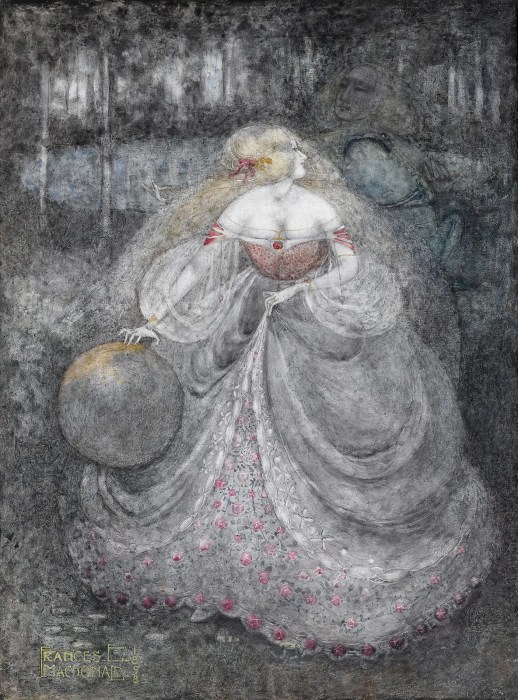
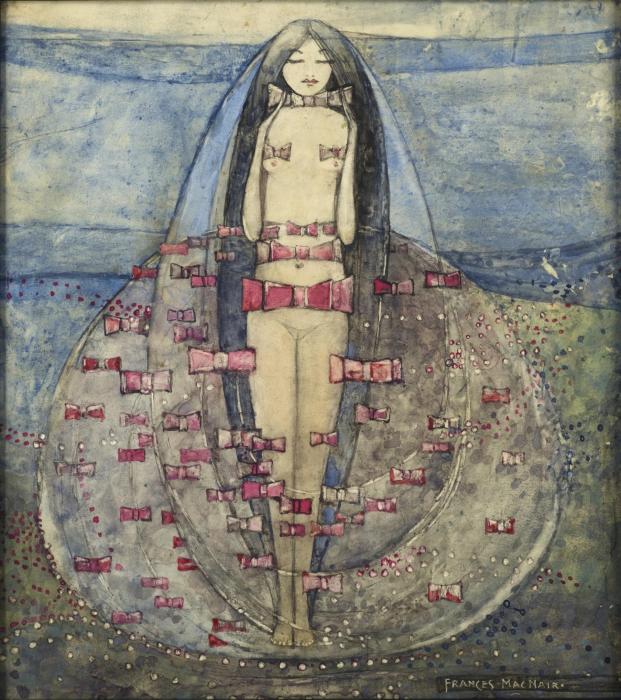
Frances MacDonald (1873–1921)
Sister of Margaret MacDonald and an equally gifted Symbolist, she created haunting, mystical works inspired by Celtic myth and spiritual allegory.
Jessie M. King (1875–1949)
One of the most celebrated Glasgow Girls, King was an illustrator and designer whose fairy‑tale imagery and flowing line made her internationally renowned.
Annie French (1872–1965)
Celebrated for her delicate ink drawings and lyrical line, French produced exquisitely detailed illustrations filled with floral ornament and whimsical figures — a softer, dreamlike counterpart to the linearity of Beardsley.
Ann Macbeth (1875–1948)
A pioneering embroiderer, designer, and educator, Macbeth transformed textile arts at the Glasgow School of Art and helped elevate embroidery to a respected art form.
Helen Paxton Brown (1876–1956)
A painter and designer closely linked to the Glasgow Style, Paxton Brown produced richly patterned decorative work, portraits, and interiors. Active within the same creative circle as Jessie M. King, she contributed significantly to the applied and illustrative arts that defined the movement.
Dorothy Carleton Smyth (1880–1933)
A gifted theatre designer and illustrator whose costume designs radiate dramatic flair. She became the first woman appointed Director of the Glasgow School of Art.
Olive Carleton Smyth (1882–1949)
An illustrator and designer whose refined decorative compositions reflect the same imaginative spirit that animated her sister Dorothy’s work.
Bessie MacNicol (1869–1904)
One of the most accomplished painters of the group, MacNicol created luminous portraits and plein‑air scenes influenced by Whistler and the Glasgow Boys.
Norah Neilson Gray (1882–1931)
A gifted portraitist and war artist whose paintings from World War I — especially of medical staff and wounded soldiers — are among the most poignant works produced by any Glasgow Girl.
2. Associated Artists
Agnes Bankier Harvey (1874–1947)
A painter and designer whose refined decorative work contributed to the flourishing of applied arts in Glasgow.
Courcy Lewthwaite Dewar (1878–1959)
A versatile metalworker and designer, Dewar brought a crisp, modern sensibility to the decorative arts, reflecting the Glasgow School’s commitment to uniting beauty and utility.
Mary Thew (1876–1953)
A painter and illustrator known for expressive portraits and atmospheric scenes, often marked by gentle emotional depth.
Jessie Newbery (1864–1948)
A revolutionary figure in embroidery and textile design, Newbery transformed the GSA’s needlework department and influenced generations of women artists.
Marion Henderson Wilson (1869–1956)
A painter and designer associated with the Glasgow School, contributing elegant decorative work and teaching in the applied arts.
Eleanor Allen Moore (1885–1955)
A painter known for sensitive portraits and scenes of daily life, later continuing her work while living in China.
Katherine Cameron (1874–1965)
An illustrator and painter celebrated for her lyrical depictions of Scottish folklore, wildlife, and pastoral scenes. Her refined line and softly glowing colour made her one of the most distinctive book illustrators associated with the Glasgow Style.
Janet Aitken (1873–1941)
A painter and designer whose work reflects the decorative elegance of the Glasgow School. She produced portraits, landscapes, and applied‑arts designs marked by clarity of form and a quiet, contemplative mood.
Agnes Raeburn (1872–1955)
A painter known for atmospheric landscapes and still lifes, Raeburn brought a subtle, tonal sensitivity to the Glasgow Girls circle. Her work often balances naturalistic observation with a gentle decorative restraint.
Jessie Keppie (1868–1951)
A painter and designer connected to the broader Mackintosh circle, Keppie contributed portraits, floral studies, and decorative compositions that embody the graceful linearity of the Glasgow Style. She was also active in the city’s artistic societies and exhibitions.








Why They Matter
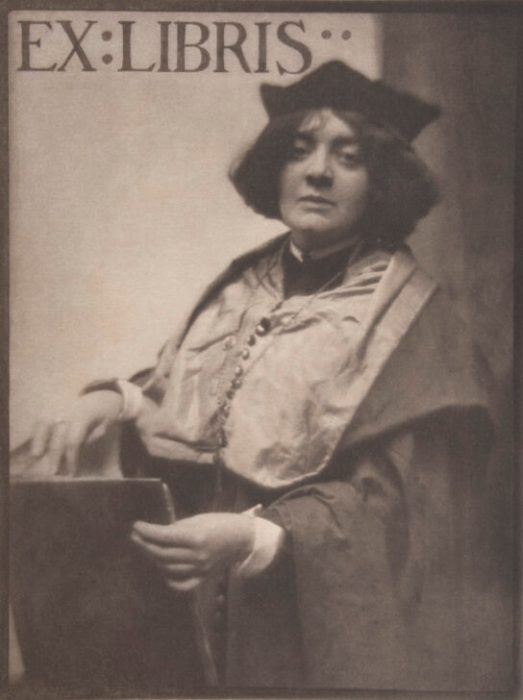
The Glasgow Girls were pioneers. They challenged gender norms, expanded the boundaries of what women could do in the arts, and contributed significantly to the visual identity of early twentieth‑century Scotland. Their achievements were, for decades, overshadowed by their male contemporaries, but recent scholarship has restored their rightful place in art history.
Their influence resonates today in the renewed appreciation for the decorative arts, the revival of interest in the Glasgow Style, and the recognition of women’s contributions to modernism across Europe.
Looking Ahead
Across this blog, these artists will appear again and again — their images, their voices, and the imaginative force that made the Glasgow Girls such a vital part of European modernism.
When you are interested knowing more about the Glasgow Style, do visit this page: https://robynecalvert.com/glasgow-style/