The Finnish Connection:Helene Schjerfbeck
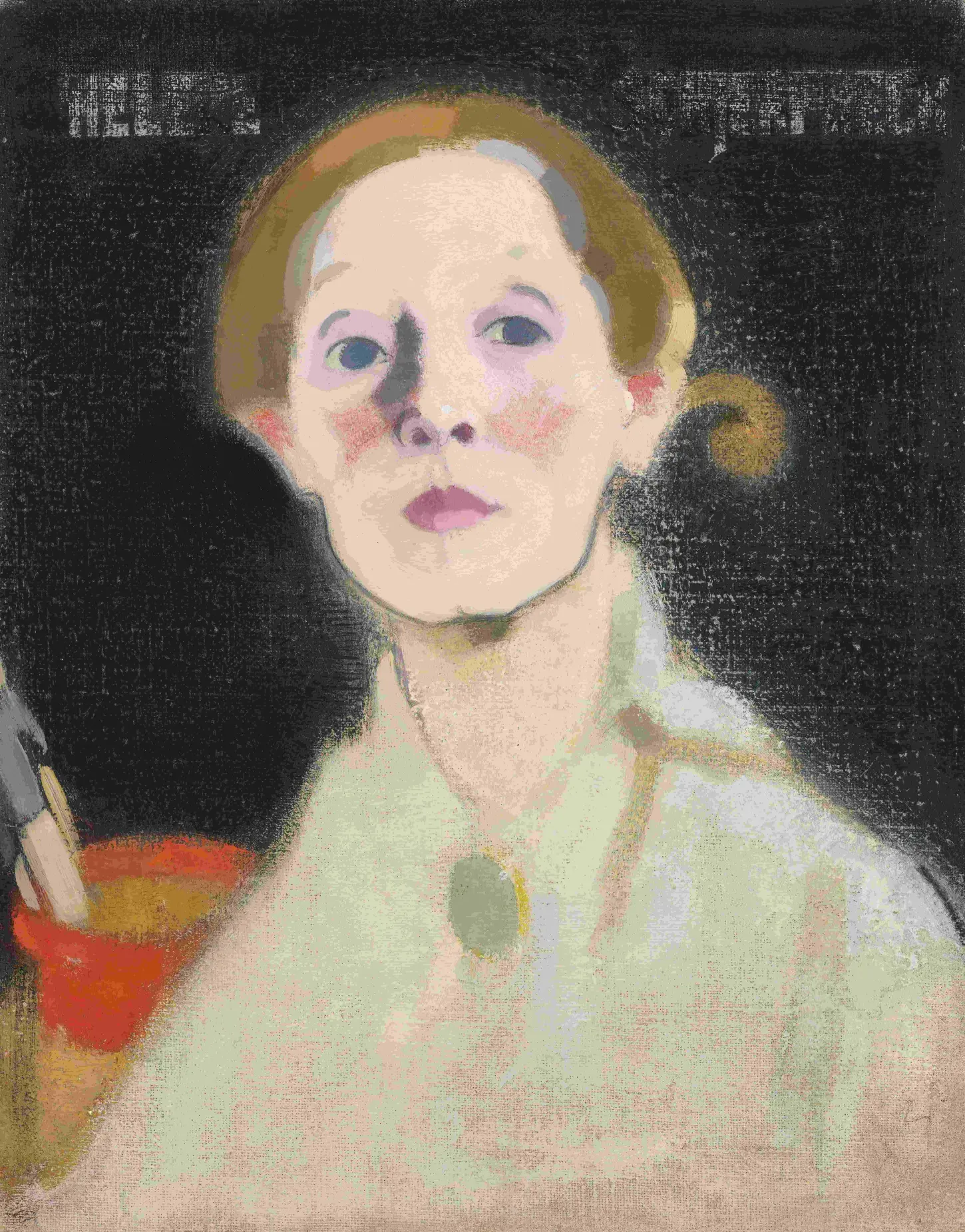
Self-Portrait, Black Background (Mustataustainen omakuva), 1915
Oil on canvas
45.5 × 36 cm
©Finnish National Gallery, Ateneum Art Museum, Helsinki
In the autumn of 1915, a letter from Helsinki reached Helene Schjerfbeck in the quiet railway town of Hyvinkää. She was fifty-three and living a largely secluded life. The Finnish Art Society wanted a self-portrait for its conference room, making her the only woman invited to contribute. Schjerfbeck set up her easel, painted her name across the black canvas like an inscription on stone, and answered the capital on her own terms.
A Commission From the Margins
By 1915, Schjerfbeck had spent more than a decade away from Helsinki’s art circles. Her dealer, Gösta Stenman, had only recently begun championing her newer, simplified works to a skeptical public. Receiving an official request from the Finnish Art Society marked a rare public acknowledgment of her standing in Finnish art.
She approached the canvas with clear purpose. She bypassed traditional flattery and framed herself directly as a serious working painter. The commission offered an opportunity to assert her place among Finland’s leading modernists, a shift already visible in The Red-Haired Girl II, 1915.
Old Master Echoes and Modern Reduction
Schjerfbeck looked to Renaissance portraiture when designing the layout. Across the upper corners of the dark background, she painted her first and last name in pale, silver-gray block letters. In letters to friends, she noted that the stark inscription resembled lettering on a headstone, linking artistic fame with mortality.
At the lower left, beside her shoulder, sits a reddish-orange jar filled with upright paintbrushes. This single burst of warm color draws the eye and quietly identifies her as a painter. The rest of the palette stays strictly restrained, relying on soot black, chalky white, and the pale greenish-gray of her garment fastened with a dark oval brooch.
Scraping Away the Surface
Her brushwork reveals the physical labor behind the calm expression. Schjerfbeck applied thin layers of oil paint, then scraped into the surface so the rough weave of the canvas remained visible. Broad, flat shadows hollow out the side of her nose and eye sockets, reducing the illusion of depth and volume.
Her head tilts slightly, and her raised eyebrows give her gaze an alert, questioning intensity. A single loose curl of hair breaks the silhouette on the right, balancing fragility with quiet control.
Toward a More Spare Style
This self-portrait stands at a turning point in Schjerfbeck’s career. Over the previous decade, following early transitional works like Fragment (Katkelma), 1904, she had steadily pared back narrative detail. Here, she turns that increasingly spare approach inward with remarkable confidence.
Within a year, she would carry this economy of line even further in Circus Girl, 1916. The process of simplification visible in this self-portrait would continue for decades, eventually leading to the striking late self-portraits for which Schjerfbeck is now best known.
Leave a Reply