Die Neukunstgruppe and Friends of Schiele: Franz Wiegele
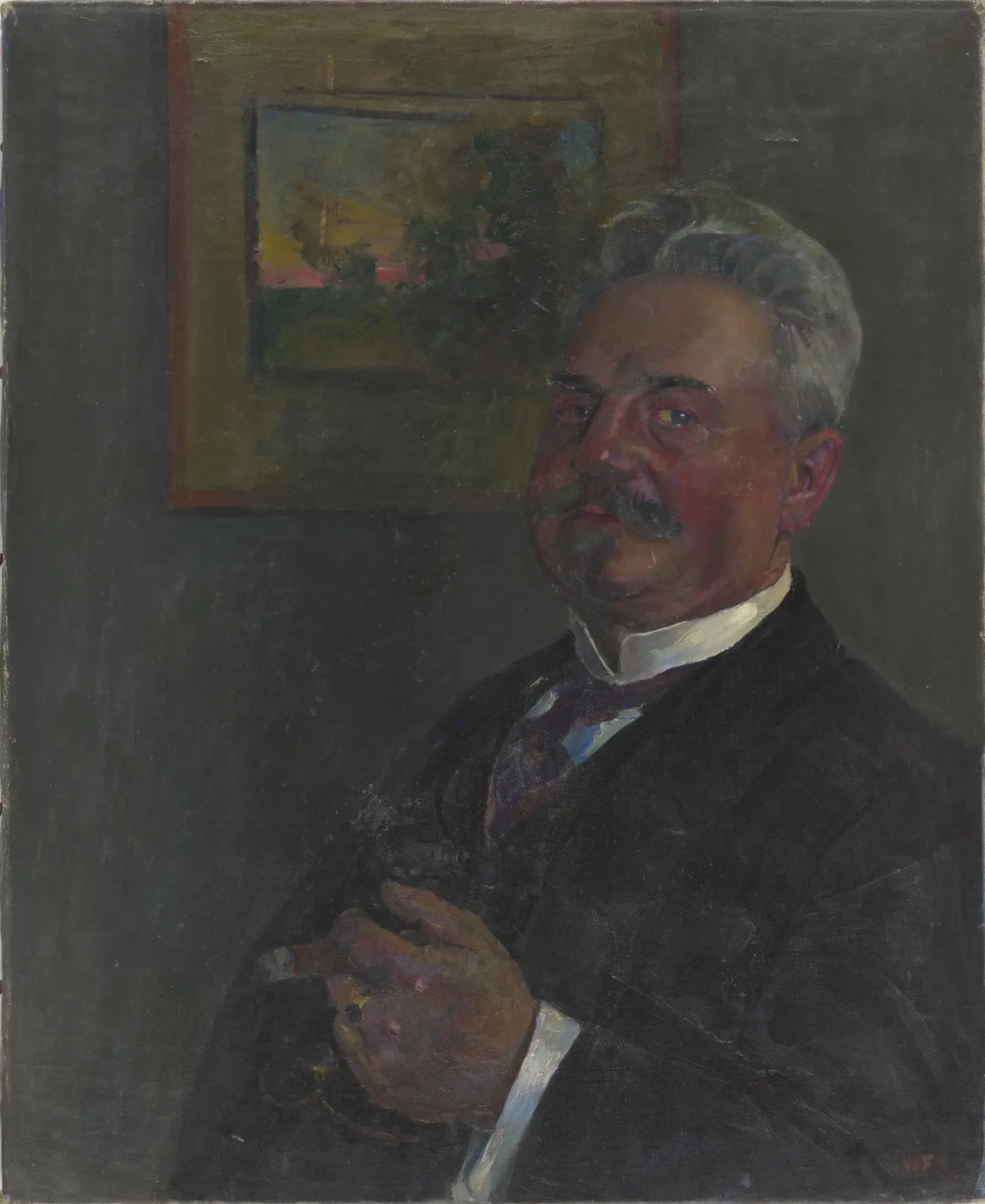
Portrait of Leopold Czihaczek (Bildnis Leopold Czihaczek), 1911
Oil on canvas
58.5 x 45.5 cm (Image size, recto)
©Wien Museum, Vienna (Sammlung Peschka)
In 1911, the Austrian modernist painter Franz Wiegele painted a formal portrait of Leopold Czihaczek, a senior railway official best known as the uncle and former guardian of Egon Schiele. This sitting took place at a highly volatile moment, right when the personal relationship between Schiele and his uncle had broken down completely. The resulting canvas offers a rare look at how the early Viennese avant-garde remained connected though to Schiele’s personal family circle.
The Rupture Between Uncle and Nephew
The year 1911 marks a definitive turning point in the biography of the Schiele circle. Until the summer of 1910, Czihaczek was a constant subject in Egon Schiele’s work, standing for financial stability and the traditional values of the imperial civil service. Schiele captured this domestic authority in early works like his Portrait of Leopold Czihaczek, 1907, which placed his guardian in a conventional interior. However, Schiele’s radical new art styles, his constant money troubles, and his choice to live with Wally Neuzil caused a permanent split with his uncle by late 1910.
The arrival of Wiegele in Czihaczek’s home in 1911 introduces an unexpected twist. Wiegele, whose early artistic growth can be seen in A Girl Reading, c. 1920, had walked out of the Academy of Fine Arts in Vienna alongside Schiele in 1909 to form the rebel Neukunstgruppe. While Schiele was living a chaotic life outside the city, his former classmate gained direct access to the man who had rejected Schiele’s lifestyle. Instead of copying Schiele’s nervous, sketchy lines, Wiegele painted the older man using solid blocks of color, showing his own growing interest in the structural methods of Paul Cézanne.
Inside the Peschka Family Collection
Official records from the Wien Museum show that this specific painting entered their collection straight from the Sammlung Peschka. This means the artwork belonged to the painter Anton Peschka and his wife Gertrude or Gerti, who was Schiele’s sister. Finding a portrait of Czihaczek by Wiegele inside the Peschka home proves that even though Schiele broke off contact with his former guardian, his sister and his fellow artists kept up active, practical ties with the old railway official.
These family connections were reinforced by close partnerships within the early modernist group. In 1911, the very year this portrait was painted, Wiegele’s close friend and fellow academy rebel Anton Kolig married Wiegele’s sister, Katharina. The home lives and careers of these young painters stayed closely linked, a reality seen in later works like The Artist’s Wife with Flowers, 1913. The fact that Peschka kept this portrait suggests that the older man continued to help or interact with the new generation of painters behind the scenes, even as his relationship with his own nephew remained broken.
A Path to Independent Success
The physical setup of the canvas highlights the artistic shifts happening within the Neukunstgruppe during their first independent group shows. The back of the painting features the clear handwritten monogram “WF”, confirming its place in the artist’s early inventory. Wiegele’s choice to focus on structured portraits during these months fits perfectly with the shared goals of his peers, who were all trying to find independent collectors away from the official Academy and the main Secession.
These independent strategies were vital for the young group to survive. The original decision to break away from the academic art world had been pioneered earlier by members of their immediate circle, as seen in Schiele’s Portrait of the Painter Anton Faistauer, 1909. For Wiegele, finishing this 1911 commission preceded his departure for Paris, where he studied on a travel scholarship backed by Gustav Klimt. The portrait stands as a lasting record of how the wealth and family ties of the Viennese middle class continued to support the artists building the modernist movement.
Leave a Reply