Egon Schiele:
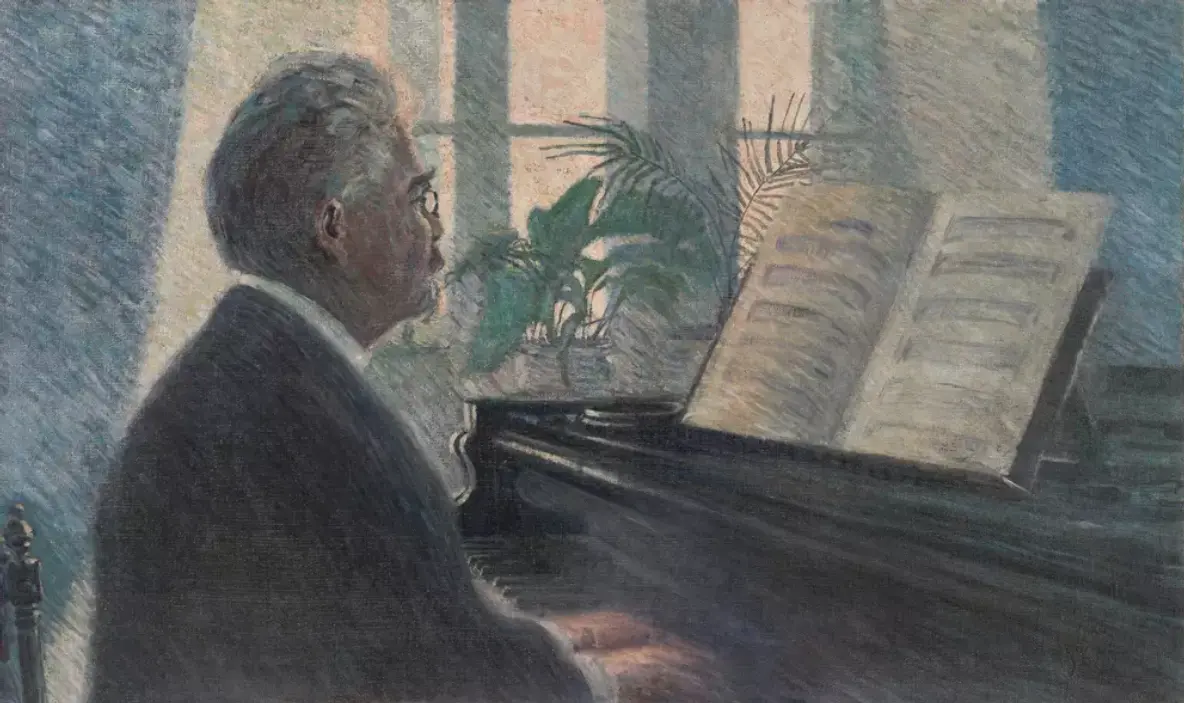
Leopold Czihaczek at the Piano (1907)
Oil on canvas
60.2 × 100.7 cm
©Leopold Museum, Vienna
(Kallir P19)
Before Egon Schiele became known for his raw, contorted figures and emotionally charged self-portraits, he painted this quiet scene: his uncle Leopold Czihaczek seated at the piano, lost in music. It was 1907, and Schiele was just 17 years old—still a student, still working within the bounds of academic realism. But even here, you can sense the beginnings of something more personal.
Czihaczek wasn’t just a subject—he was a central figure in Schiele’s early life. After Egon’s father died, it was Czihaczek who stepped in as guardian, offering structure and support during a time of grief and uncertainty. A railway official by profession, he was practical, reserved, and deeply rooted in tradition. He helped Schiele gain admission to the Academy of Fine Arts in Vienna, believing in his talent even before the world did.
The painting itself is calm and domestic. Czihaczek sits at the piano, absorbed in his own rhythm. There’s no theatrical lighting, no symbolic backdrop—just a man in his element. The elongated canvas gives the scene a sense of space and quiet, while the muted tones reflect the understated mood. It’s not a portrait in the conventional sense; it’s a moment observed with care.
Interestingly, Schiele also made a preparatory sketch for this painting. That study shows his early compositional thinking and reinforces how considered this work was—even at a young age, Schiele was already exploring how to translate intimacy into form.
But the relationship between uncle and nephew wasn’t without tension. As Schiele’s art grew bolder—exploring sexuality, psychological depth, and breaking away from academic norms—Czihaczek reportedly struggled to understand the direction Egon was heading. Their bond, once close, began to fray. This painting, then, feels like a snapshot from before that shift—a gesture of respect, maybe even affection, before the rupture.
Created while Schiele was still a student, this work reflects the academic realism of the time. But it also hints at something deeper: a young artist learning to observe, to feel, and to express. The absence of overt symbolism allows the viewer to focus on the relationship between artist and subject.
The painting, part of the Leopold Museum’s collection in Vienna, marks a moment before the break—before Schiele’s lines grew jagged and his figures raw. It’s a portrait of a man, yes, but also of a moment: when Schiele was still rooted in tradition, still connected to family, and still discovering the power of paint.


Leave a Reply