Die Neukunstgruppe and Friends of Schiele: Anton Kolig
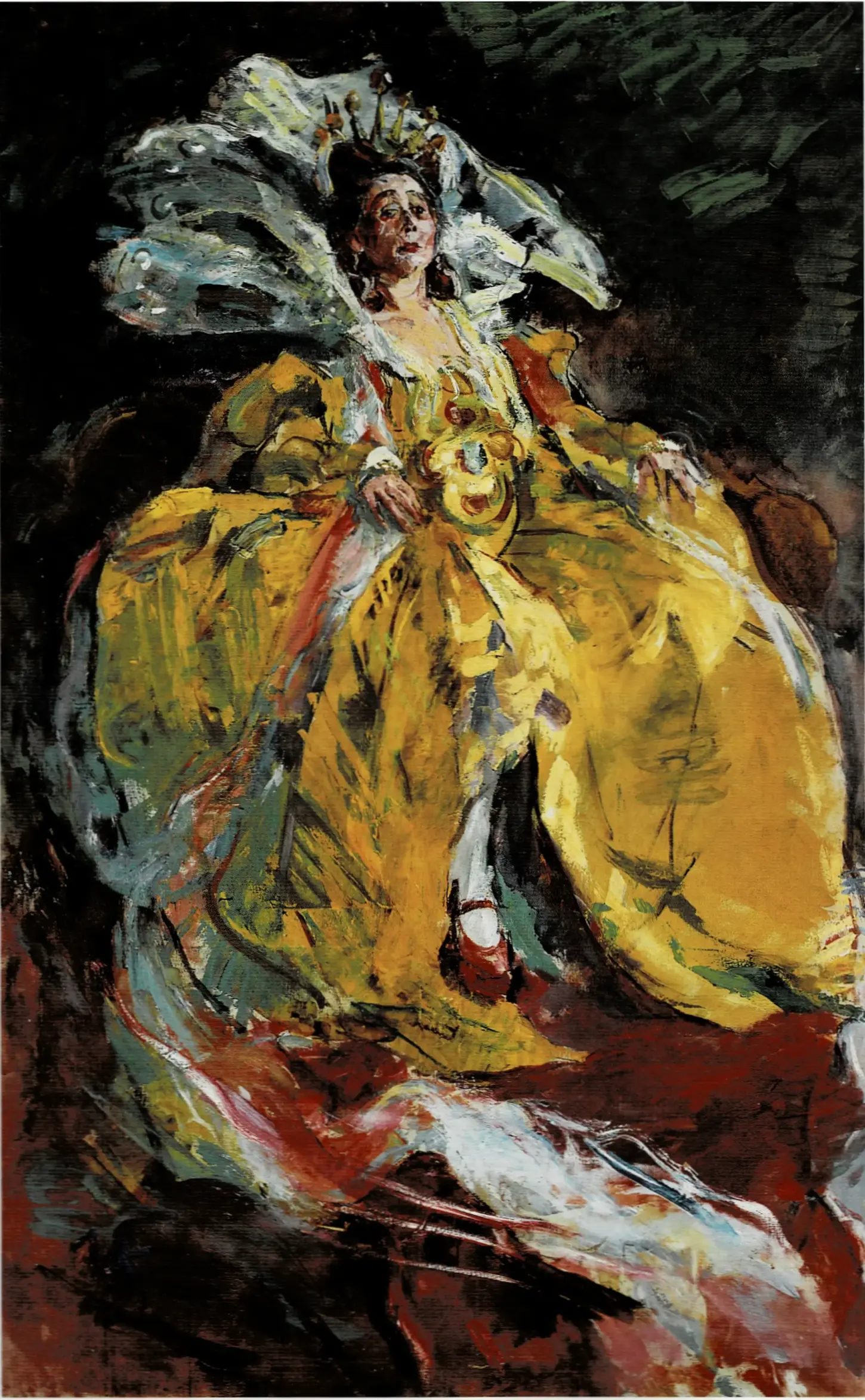
Marie Gutheil-Schoder as Potiphar’s Wife (Marie Gutheil-Schoder als Frau Potiphar), 1923
Oil on canvas
224 cm x 146 cm
©Theatermuseum, Vienna
The painting Marie Gutheil-Schoder as Potiphar’s Wife is one of the large-scale Expressionist theater portraits in the collection of the Theatermuseum in Vienna. Painted by the Austrian artist Anton Kolig in 1923, the work captures a pivotal figure of the Viennese operatic avant-garde. The portrait serves as a document of the artistic cross-pollination between modern painting, theater photography, and early 20th-century staging.
The Commission and the Model
The commission for this portrait was arranged by the Austrian writer Richard von Schaukal on behalf of the Vienna State Opera. Its subject, the German soprano Marie Gutheil-Schoder (1874–1935), was a key interpreter of modern musical theater in Vienna. Brought to the city by Gustav Mahler, she became known for executing complex roles for composers such as Arnold Schönberg and Richard Strauss, focusing heavily on the physical and dramatic acting required on stage.
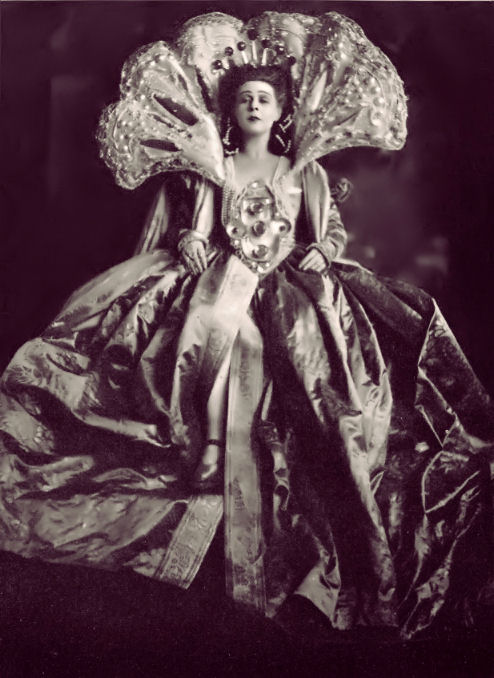
To construct this composition, Kolig did not rely solely on live sittings. Instead, he utilized a series of studio photographs from his family archive. These photographs, captured in 1922 by the prominent Viennese photographer Franz Xaver Setzer, documented Gutheil-Schoder in her original stage costume. Although Kolig used these photographs as a clear visual anchor for the dress and posture, the singer also traveled to Vienna to model for him in person.
The Visual Presentation of a Silent Role
The painting depicts Gutheil-Schoder in her role as Potiphar’s Wife in the ballet Josephs Legende by Richard Strauss, which premiered in Paris in 1914. While the libretto by Harry Graf Kessler and Hugo von Hofmannsthal designed this character as a silent pantomime role, Kolig opted for a heavy, physical presence on the canvas.
The figure occupies nearly the entire vertical space of the canvas. The historical costume dictates the layout: she is clad in an expansive, stiff-hooped golden-yellow dress accented by a long, dark purple-red train trailing onto the floor. Behind her crowned head rises a large, stylized fan collar.
Kolig shifts away from the clean lines of Setzer’s photography in favor of a raw, fluid application of paint. The brushwork is rapid and blocky, using heavy impasto and contrasting shadows to render the drapes of the fabric. Rather than presenting a clean, idealized operatic portrait, the depiction leans into a deliberate awkwardness, isolating the figure against a dark, unresolved background.
Post-Empire Constraints and Critical Reception
The execution of the painting was heavily impacted by the volatile socio-economic environment in Vienna following the collapse of the Austro-Hungarian Empire. Facing strict time constraints and financial pressure, Kolig worked at an accelerated pace.
The artist remained highly critical of the final result. In a letter dated December 1923 to his patron Richard von Schaukal, Kolig dismissed the completed work, stating that the portrait was “not yet mature” and calling it “a sketch—though a sketch containing a great deal.” He attributed its shortcomings to the exhaustion of working during “bad times.”
Despite Kolig’s own dismissal, the canvas survived the shifting tastes of the interwar period. It is now permanently housed in the Theatermuseum inside the baroque Palais Lobkowitz in Vienna, where it stands as a prime example of Austrian Expressionism’s engagement with the stage.
A Note on the Source:
This post is indebted to Otmar Rychlik’s definitive catalogue raisonné, Anton Kolig 1886–1950. Das malerische Werk. The historical details regarding the Setzer photographs and Kolig’s correspondence with Richard von Schaukal are drawn directly from Rychlik’s invaluable archival commentary.
Leave a Reply