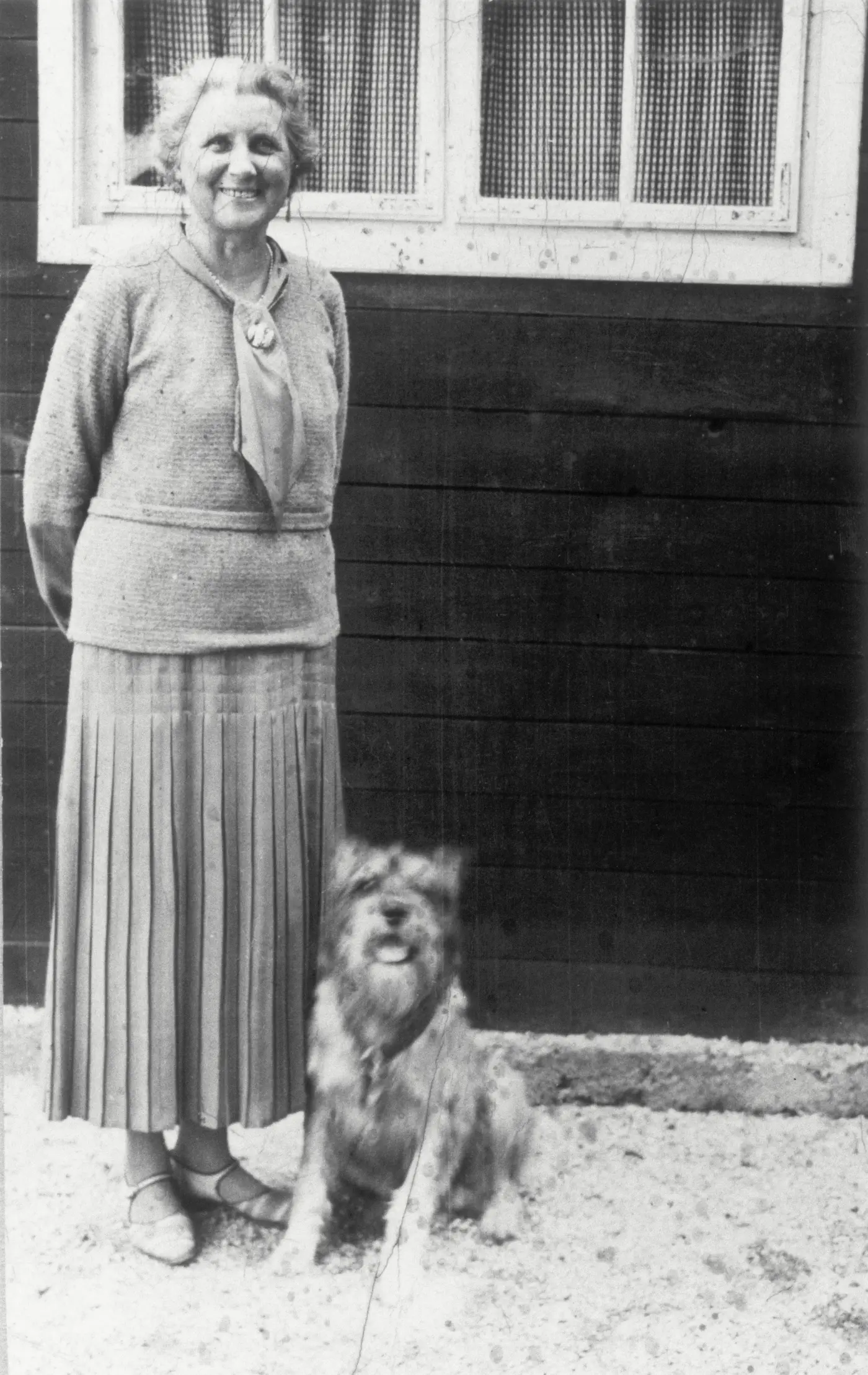
The Muse Survives: A Rare Glimpse of Emilie Flöge in 1935
The story of the Vienna Secession often seems to stop in 1918, the year both Gustav Klimt and Egon Schiele died. But the history continued through the people who outlived them. Emilie Flöge outlived most of her immediate circle. Her elder sister and business partner, Pauline, passed away in July 1917. Just a few months later, in January 1918, Gustav Klimt suffered a severe stroke that left him half-paralyzed. While in the hospital, his weakened body succumbed to pneumonia—widely believed by historians to be a result of the Spanish Flu pandemic. He died on February 6, 1918.
The Private Archive
Following Gustav Klimt’s death, Emilie became the legal administrator of his artistic estate, inheriting half of his remaining property, including hundreds of drawings and sketches. While she kept nearly 400 postcards and travel notes from Klimt, family accounts indicate that she destroyed their most intimate personal letters shortly after his death to protect their privacy from public scrutiny.
The Salon After Klimt
Despite these personal losses, her famous fashion salon, Schwestern Flöge—located at Mariahilferstraße 1b (Casa Piccola)—did not close. Together with her sister Helene, and later joined by her niece Helene “Leni” Klimt (the daughter of Ernst Klimt and Helene Flöge), Emilie successfully ran the business for another twenty years, catering to Vienna’s high society. Inside the salon, she kept a locked ‘Klimt Room’ that served as a private archive for his remaining effects, including his painter’s smocks, his easel, and numerous sketches.
Displacement and Loss
The salon operated until 1938, when the Nazi Anschluss of Austria and the subsequent loss of its primary, largely Jewish clientele forced its closure. Her sister Helene had also passed away shortly before this period, in January 1936. Forced to leave the Mariahilferstraße location, Emilie moved to an apartment at Ungargasse 39, taking the locked Klimt archive and her business records with her.
In April 1945, during the final days of World War II, a fire destroyed the Ungargasse apartment building during heavy street fighting in Vienna. Officially, her garments and the remaining Klimt archive were recorded as lost in the fire. However, the subsequent appearance of previously undocumented Klimt sketches on the art market over the decades has led art historians to suspect that parts of the collection may have been looted before the building burned down.
An Informal Portrait
This context makes the photograph above very special. Taken around 1935, when Emilie was about 61 years old, it offers a rare, informal look at her later life. Standing outside next to her dog, Toby, she appears quite different from the highly stylized portraits of her youth. The image simply documents a later chapter in Flöge’s life, far removed from the stylized context of her early years in Vienna.

Leave a Reply