Catalan Modernisme: Santiago Rusiñol
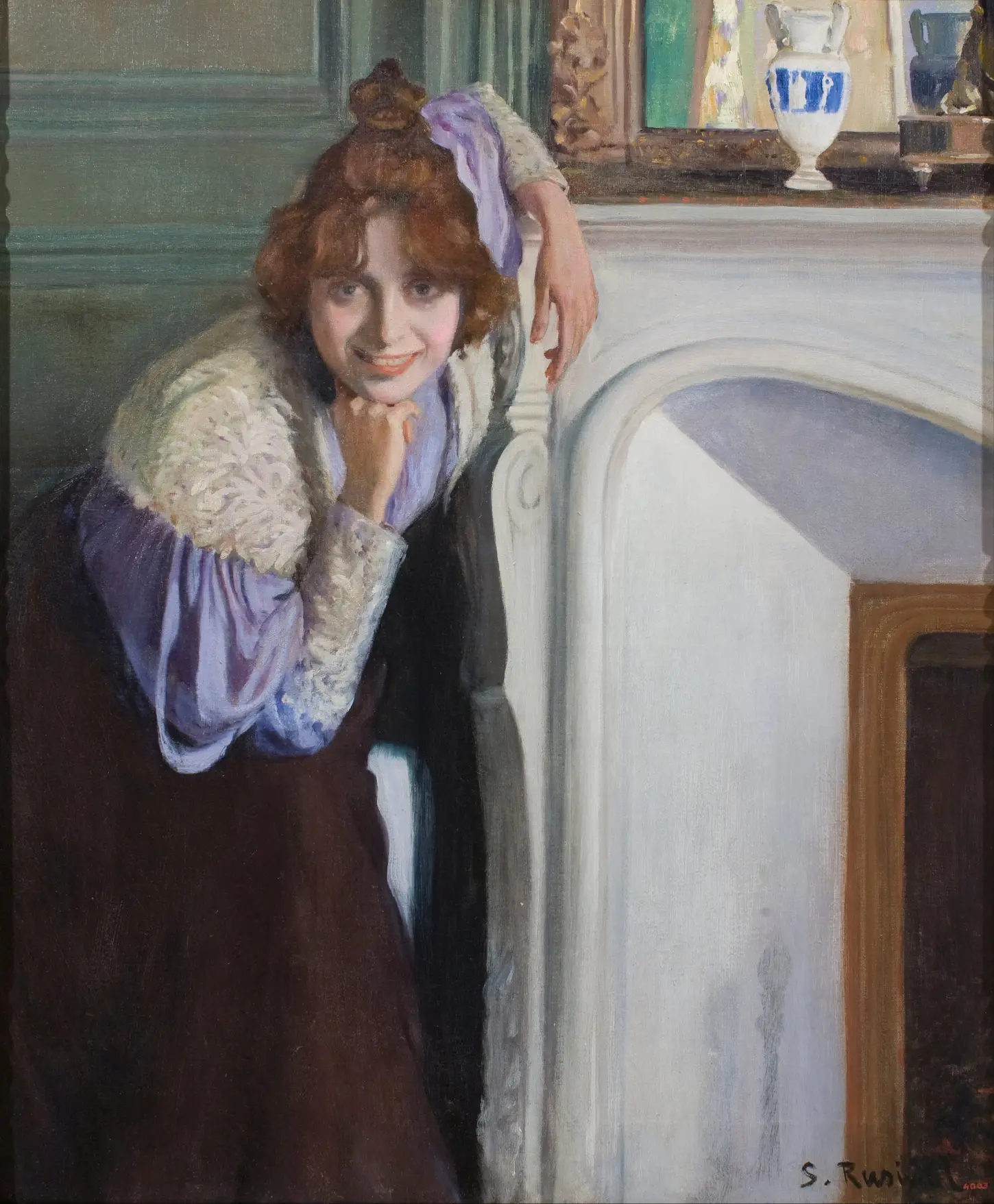
Laughing Girl (La riallera), 1894
Oil on canvas
65 x 54 cm
©Museu Nacional d’Art de Catalunya, Barcelona
Suzanne Valadon sits at a wooden table with her head tilted during a sudden moment of laughter. Santiago Rusiñol recorded this glance in 1894 inside his apartment on the Quai de Bourbon. His brush captured a real conversation between two creators who shared a chaotic world in Montmartre.
From Barcelona to Montmartre
Rusiñol occupied a unique position within Catalan art. Born into a wealthy family of textile industrialists in Barcelona, he abandoned the family business to pursue painting. He moved to Paris in the late 1880s, settling in Montmartre where he documented the everyday realities of the suburban landscape. Rusiñol worked as a painter, a playwright, and a journalist, making him a central intellectual figure. Together with Ramón Casas, he formulated a style that challenged the conservative Spanish art establishment. His winters on the Quai de Bourbon allowed him to gather international influences, which he later imported directly to his home region.
Valadon Beyond the Canvas
Before establishing her own career as a painter, Valadon operated at the very center of this Montmartre avant-garde. She transitioned from a circus acrobat to a sought-after model, working closely with Pierre-Auguste Renoir and Henri de Toulouse-Lautrec. However, Valadon used her time in these studios to study the techniques of her peers. By 1894, the year Rusiñol painted this portrait, Edgar Degas had already recognized her talent and began purchasing her drawings. Rusiñol’s portrait records Valadon not as a passive subject, but as a fellow artist who shared a sharp, intellectual connection with the Catalan circle in Paris.
Two Easels and a Hidden Reflection
The structure of the painting relies on a tight framework. Valadon sits behind a wooden surface that cuts horizontally across the lower part of the frame. Rusiñol applied quick strokes of oil paint to define the pattern of her dress. Interestingly, his colleague Miquel Utrillo worked in the same room during this specific session. Utrillo painted a nearly identical portrait of Valadon from a slightly different perspective. While Utrillo’s original work remains in an untraceable private collection, Rusiñol left a direct clue of their shared studio space on his own painting. In the mirror surface on the upper right wall, a close inspection reveals the faint reflection of Rusiñol himself. He stands behind his easel, capturing Valadon’s expression while making his own presence part of the painting.
Redefining the Spanish Tradition
This portrait shows how Catalan artists integrated into the Parisian art scene through their connection with local figures like Valadon. Rusiñol did not adopt the heroic themes of older Spanish art. Instead, he brought French naturalism back to Barcelona. This exchange helped shape the local avant-garde. The focus on everyday figures places the painting within the development of the Spanish Connection. This Parisian indoor study offers a strong stylistic contrast to other painters in the category, such as Joaquín Sorolla who focused entirely on the blinding outdoor light of the Mediterranean coast. It illustrates how artists from the region used their travel experiences to build a fresh, regional vocabulary away from traditional rules.
Leave a Reply