Egon Schiele:
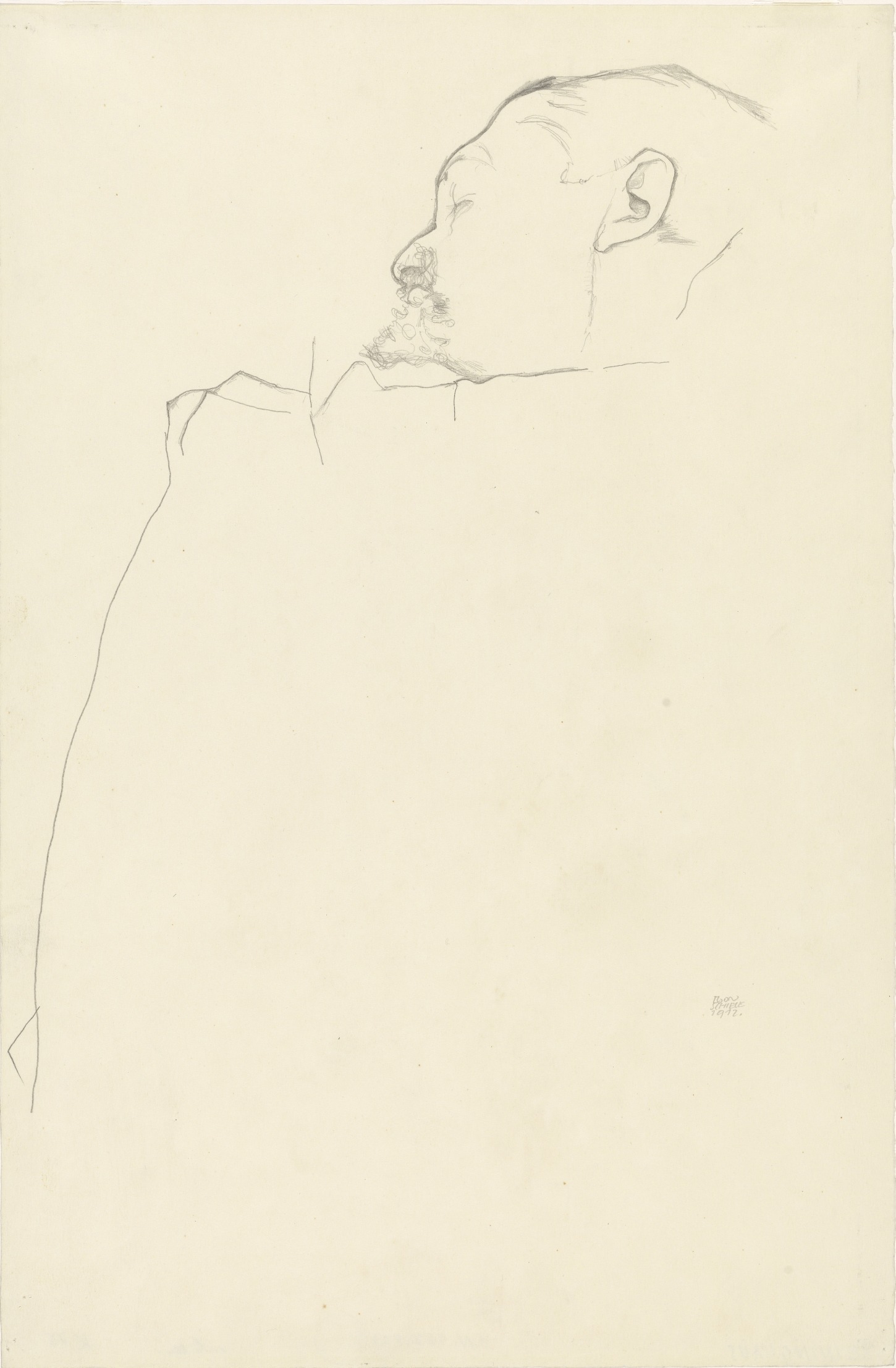
Portrait of Carl Reininghaus (Porträt Carl Reininghaus), 1912
Pencil and gouache on paper
48.2 x 31.5 cm
©Wien Museum, Vienna
(Kallir d1125)
In the dark months following his imprisonment in Neulengbach, Egon Schiele found himself financially ruined and emotionally isolated from the Viennese art world. The man who stepped forward to save him was Carl Reininghaus, a wealthy Austrian beer brewer and one of the most daring art collectors of the era. Reininghaus bought a large group of new drawings and paintings in a single transaction, providing the desperate artist with the funds and validation needed to rebuild his career. This quiet portrait study records the personal bond between the young painter and the patron who rescued him from collapse.
Beyond the wealth of an industrialist
Traditional portraits of early twentieth-century businessmen usually functioned as simple status symbols, filled with luxurious interiors and signs of social power. Schiele completely abandoned these expectations to focus entirely on the inner life of the man behind the fortune. He placed Reininghaus against a plain paper background, stripping away all indicators of his industrial wealth.
This intimate focus connects the drawing directly to the style Schiele developed during his time in a prison cell earlier that year. While works like Pregnant Woman with a Child on her Arm captured the raw pain of his legal trauma, this portrait represents the hope that followed. Instead of drawing a powerful tycoon, Schiele presents a calm ally who looks down, completely lost in his own thoughts.
The hand of a thinker
The composition centers around the long, angular fingers that Reininghaus presses against his cheek. Schiele frequently used exaggerated hands to signal an internal dialogue, turning a physical gesture into a window for emotion. The lines defining the suit jacket and the contours of the face are sharp and direct, showing the typical speed and confidence that returned to Schiele’s hand after he secured financial independence.
The bare graphite lines do all the emotional work on the sheet, leaving the empty spaces of the paper to form the light and contours of his face. This drawing represents much more than a routine commission for a wealthy client. For Schiele, this sheet stands as a sincere tribute to the specific career-saving friendship that kept the flame of his art alive.
Leave a Reply