Die Neukunstgruppe and Friends of Schiele: Franz Wiegele
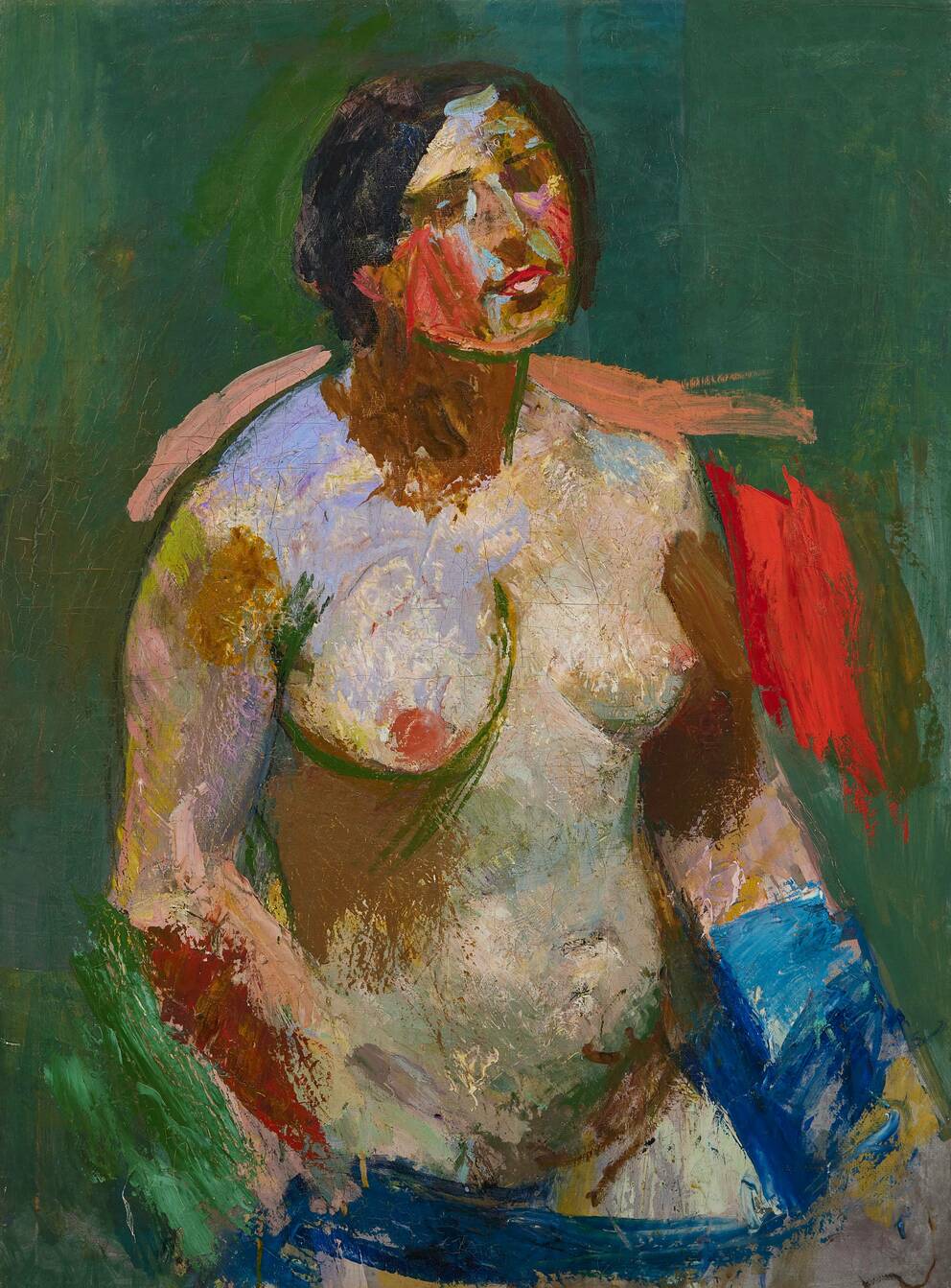
Justa (Study after Nudes in the Forest) (Justa (Studie nach „Akte im Wald“)), ca. 1910
Oil on canvas
74 x 54 cm
©Leopold Museum, Vienna,
The early history of the Neukunstgruppe shows that its members quickly went their own separate ways. Franz Wiegele co-signed the founding document of the group in 1909 alongside Egon Schiele. Schiele chose a style with heavy emotions and distorted figures. Wiegele decided to follow a very different path. He focused on clear shapes, solid bodies, and bright light.
A Different Style of Art
This painting shows Wiegele’s cousin, Justine Tarmann. He made this portrait as a preparatory study for a monumental composition titled Akte im Wald (Nudes in the Forest), painted in 1911. The final artwork depicts a group of three nude figures integrated into a dense forest landscape. The way Wiegele painted this initial study proves that the Neukunstgruppe did not share just one single style. The group was a brief starting point for young art students who left the Academy of Fine Arts in Vienna together.
Wiegele wanted his figures to look like three-dimensional objects. This approach differed from the flat lines and sharp shapes that Schiele used during those exact same months. Wiegele was also close friends with fellow artist Anton Kolig, which kept his work connected to a specific group of painters from Carinthia. By looking at this canvas in the Leopold Museum, we can see exactly how different the choices of these young artists really were.
The Path to the Nötsch Circle
Wiegele’s style became a key part of what later became known as the Nötsch Circle (Nötscher Kreis). After leaving the traditional environment of the Vienna Academy, his focus shifted toward regional landscapes, domestic portraiture, and family life. His sister Katharina married Anton Kolig in 1914, which tightened the artistic and personal connection between the two painters.
This specific study of Justine Tarmann acts as an early bridge. She was Wiegele’s first cousin, the daughter of his mother’s sister. She forms the left figure of the three-part arrangement in the final canvas. For the other two figures in that major composition, Wiegele chose his own siblings, Alfred and Katharina, to pose as models. This intimate study of his cousin remains in the Leopold Museum. The final, large-scale masterpiece Akte im Wald is preserved today in the permanent collection of the Belvedere in Vienna, though it is currently not on display.
The painting shows how Wiegele moved away from the radical experiments of the Viennese avant-garde to develop a more grounded approach to color and texture. Schiele gained fame in Vienna. Wiegele spent years traveling through France and North Africa before returning to his studio in Carinthia. This study of his cousin remains an important document of the exact moment their shared artistic paths began to separate.
Leave a Reply