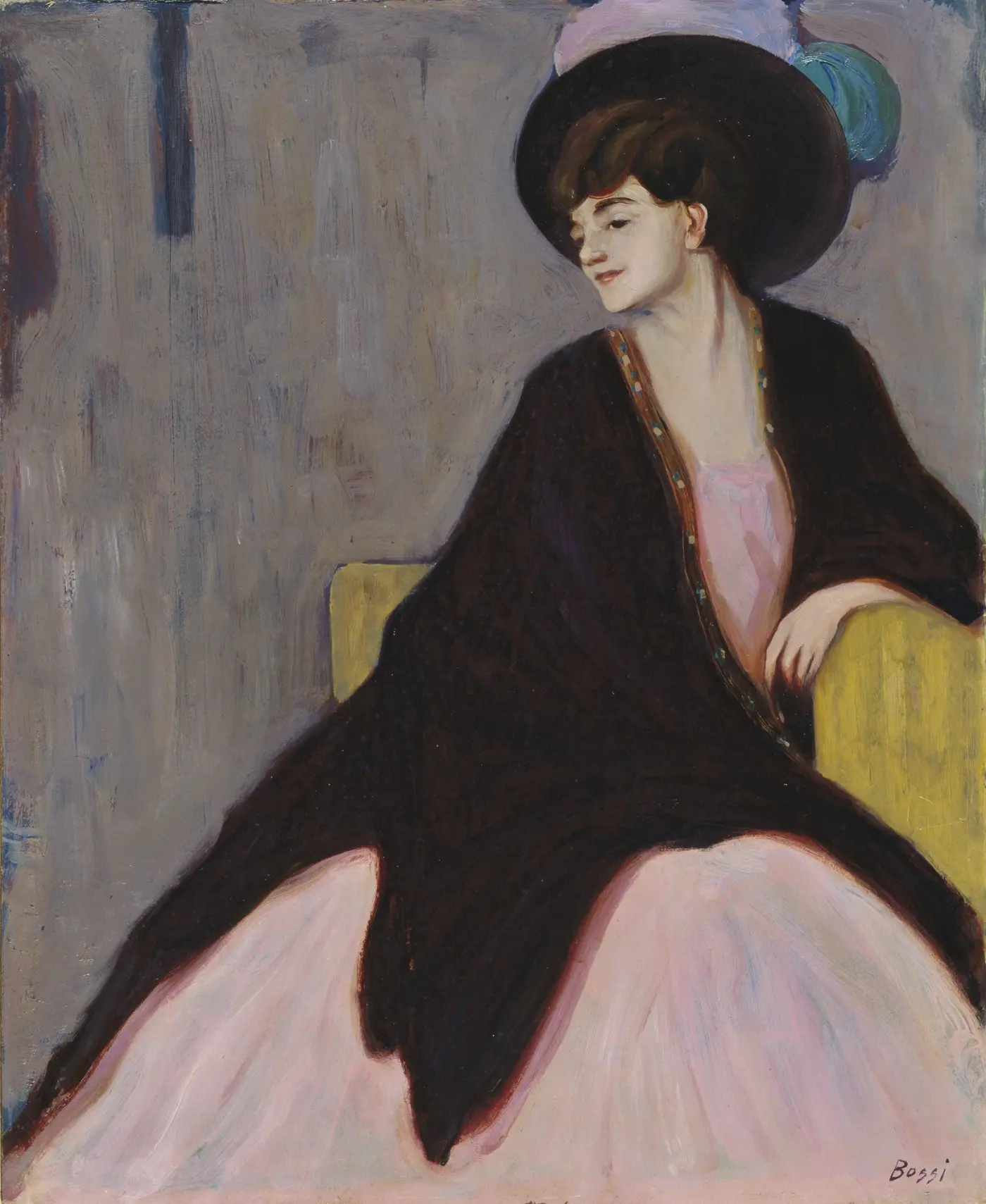
The Munich Avant-Garde: Erma Bossi
Self-Portrait (acquired in 1970 as ‘Portrait of Marianne von Werefkin’) (Selbstbildnis (als Bildnis von Marianne von Werefkin 1970 erworben)), c. 1910
Oil on cardboard
71 cm x 57 cm
©Städtische Galerie im Lenbachhaus und Kunstbau München, Dauerleihgabe der Gabriele Münter- und Johannes Eichner-Stiftung, Munich
Born in Pula back in the summer of 1875, the Italian painter Erma Bossi would grow up to face a changing European landscape while carving out her own path in art history.
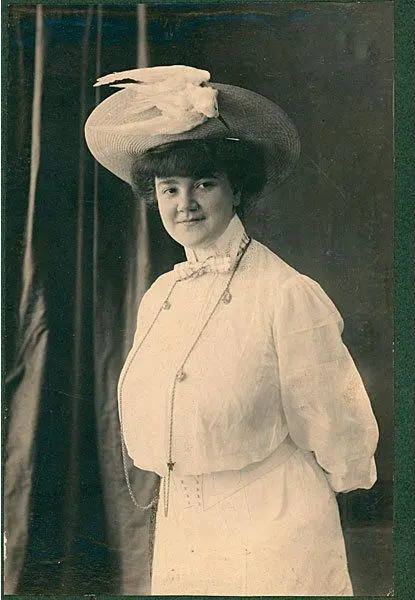
Her creative journey took a major leap forward when she decided to move to Munich. In this buzzing artistic hub, she quickly found herself running with a crowd of visionaries, forming close bonds with people like Wassily Kandinsky and Gabriele Münter. By 1909, Bossi’s talent earned her a spot as a founding member of the Neue Künstlervereinigung München. This was the exact collective that shook up the local scene and directly laid the groundwork for the legendary movement known as Der Blaue Reiter.
A Masterpiece or a Hidden Identity?
The year 1910 brought a whirlwind of creative revolution to Munich, and it was during this energetic period that Bossi captured the striking image we see today. For decades, experts believed this specific canvas was a portrait of her close friend, Marianne von Werefkin. Von Werefkin, a wealthy Russian baroness, was a powerhouse in the local art scene.
Over at her Schwabing apartment on Giselastraße 23, Von Werefkin ran her famous “Pink Salon”, named after the distinct pastel-toned walls of her living room. This space served as the ultimate headquarters for the city’s avant-garde. It was a lively melting pot where painters, poets, and musicians spent long nights sharing radical ideas. Bossi was a regular guest, soaking in every bit of that intellectual energy.
However, the Lenbachhaus museum in Munich recently uncovered a fascinating twist. Though they bought the piece in 1970 under Von Werefkin’s name, deep archival research points in a different direction. Because the face on the canvas shares undeniable features with Bossi herself, the museum now officially cataloged the artwork as a Self-Portrait.
Whether Bossi was painting herself or her famous friend, the canvas makes a powerful statement. Instead of showcasing a passive muse, the artist presents a highly confident intellectual dominated by a massive black hat, standing tall in a world run mostly by men. Stylistically, the painting beautifully bridges the gap between intense German Expressionism and French modernism, carrying traces of Matisse’s bold colors and Seurat’s structured style.
The Mystery of a Forgotten Pioneer
Bossi’s everyday life was deeply woven into the fabric of the expressionist movement. During the summers of 1909 and 1910, she stayed at Gabriele Münter’s house in Murnau, working side-by-side with the core group. In fact, Münter painted a famous dinner scene of them, showing Bossi right in the middle of a fierce debate at the table.

Yet, this golden era shattered almost overnight when World War I broke out in 1914. Forced to flee, Bossi left for Paris, and much of her early expressionist work was scattered or completely lost in the chaos. Years later, she settled in Milan and shifted her focus to the more classical, structured style of the Italian Novecento movement. Because her fiery early masterpieces had vanished into private hands or disappeared entirely, art history books slowly forgot her name.
Thankfully, her story didn’t end there. A major retrospective exhibition at the Schlossmuseum Murnau in 2013 finally brought her work back into the international spotlight, restoring her rightful place in modern art history. Erma Bossi passed away in Milan on April 14, 1952, leaving behind a rare and powerful legacy that still resonates today.
Leave a Reply