The Scottish Connection: John Duncan
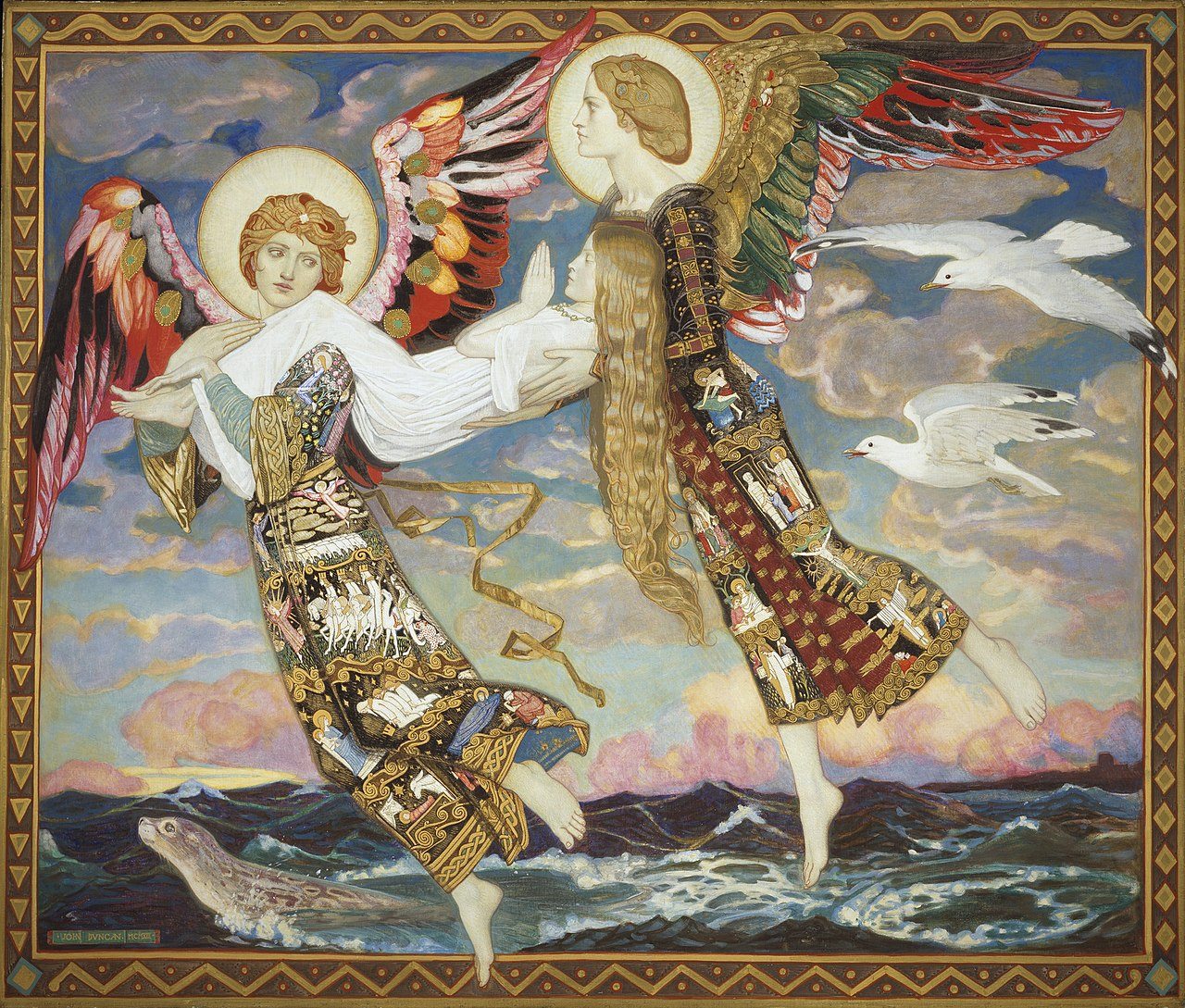
Saint Bride (1913)
tempera on canvas
122.3 × 144.5 cm
© National Galleries of Scotland, Edinburgh
Duncan paints Saint Bride with a calm, measured touch, letting the scene unfold with the softness of a remembered story. The legend tells of Bride being carried to Bethlehem to witness the nativity, and Duncan approaches this moment without drama. Popularly known in Celtic tradition as the foster‑mother of Christ, the Irish saint is transported miraculously across time and space to serve as midwife at the birth of Jesus. The two angels lift her with a quiet, almost domestic ease, as though guiding someone half‑asleep from one place to another. The tempera surface, with its matte, steady glow, gives the whole painting a sense of stillness that suits the gentle, dreamlike nature of the tale.
Behind them, the coastline anchors the vision in a landscape Duncan knew well. His long‑standing fascination with the Outer Hebrides and the Isle of Iona is present in the pale horizon and calm water — not as a literal view, but as a memory folded into the myth. He often allowed Scottish geography to sit beside Celtic legend in this way, letting the two enrich one another without forcing the connection. The result is a scene that feels both otherworldly and rooted in the places that shaped him.
Duncan was closely linked to the Celtic Revival around Patrick Geddes, a circle that believed art could help recover a sense of cultural identity. Their approach was not grand or rhetorical; it was about small acts of renewal — reviving stories, symbols, and ways of seeing that had slipped into the background. Saint Bride reflects that spirit. The painting does not try to overwhelm the viewer with symbolism. Instead, it offers a quiet, approachable moment in which myth feels close to lived experience.
His technique supports this tone. Duncan’s use of tempera, enriched with touches of gold leaf, gives the forms a clarity that never becomes rigid. The outlines are firm but gentle, the colours soft and even, and the composition balanced in a way that feels natural rather than constructed. While the overall composition feels natural, it rewards close inspection: the angels’ heavy robes are intricately decorated with miniature scenes from the life of Christ, even hiding a tiny self‑portrait of the artist as a holy fool. Bride herself is not idealised; she has a simple, human presence, as though caught in a moment of transition — lifted, guided, and watched over.
What makes the painting resonate is its restraint. Duncan lets the story breathe. The symbolism sits lightly, the mood remains steady, and the emotional register stays close to the ground. Saint Bride becomes a bridge between Celtic memory and Duncan’s own quiet imagination, offering a scene that feels both timeless and deeply personal.

Leave a Reply