Gustav Klimt:
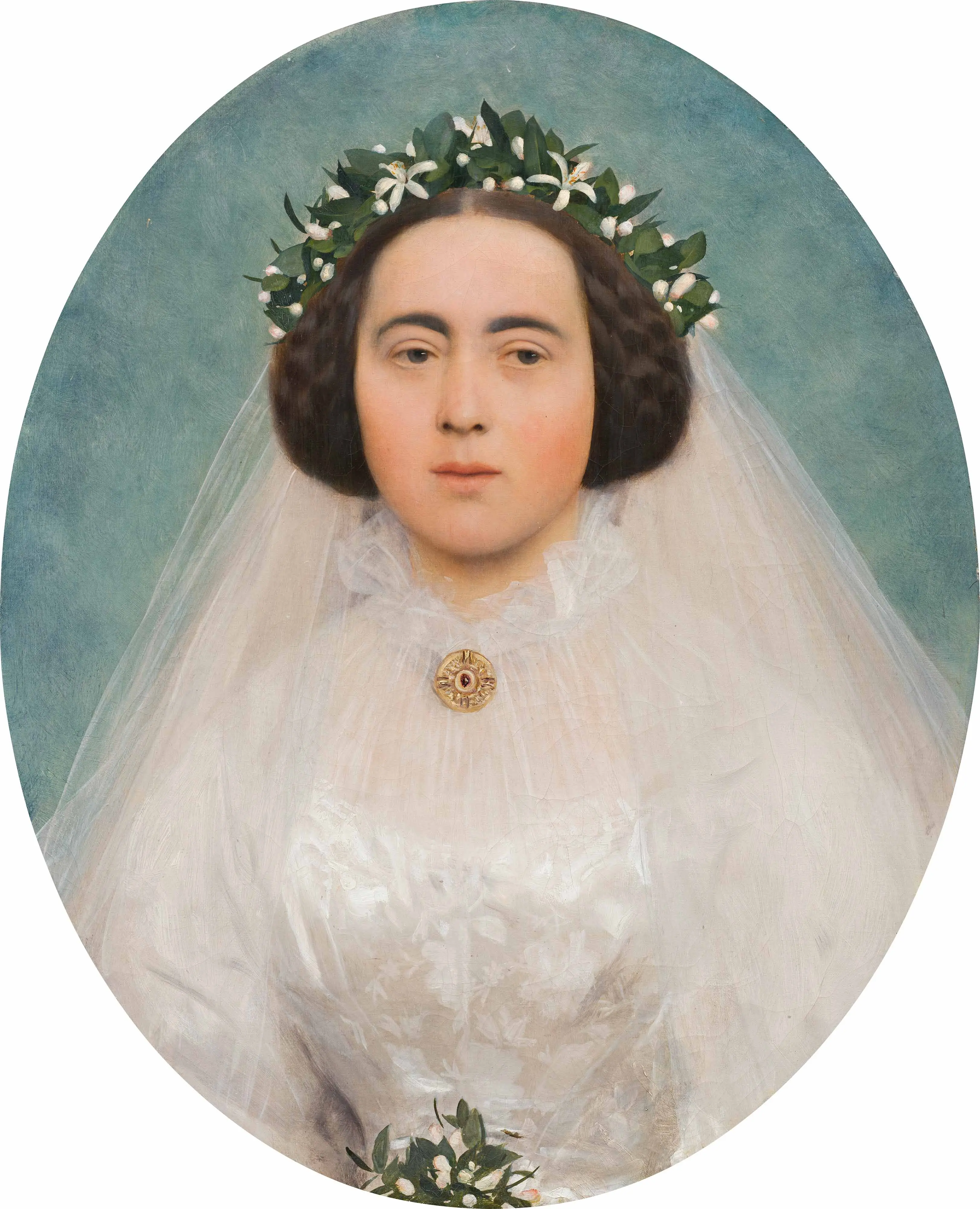
Portrait of Marie Kerner von Marilaun as a Bride in the Year 1862, 1891–1892
Oil on canvas
68 × 54 cm
Auctioned: 2024 at im Kinsky, Vienna for €210,000
(Not listed in Natter’s Klimt catalogue raisonné)
This rediscovered portrait by Gustav Klimt emerged only after the publication of Tobias G. Natter’s catalogue raisonné. Previously unknown to scholars and absent from official records, the painting has now been authenticated and recognized as a genuine Klimt work.
It was exhibited at two major retrospectives:
- Van Gogh Museum, Amsterdam (2023)
- Belvedere Museum, Vienna (2024)
Before its sale, the painting had been on long-term loan to the Belvedere, where it underwent extensive research and public display.
Historical Context and Rediscovery
Commissioned in 1891/92 by Professor Anton Kerner von Marilaun (1831–1898), a leading Austrian botanist, the portrait depicts his wife, Marie Kerner von Marilaun (1835–1919), as she appeared on their wedding day, 1 May 1862—nearly thirty years before the painting was created.
The commission was confirmed through five previously unknown letters from Klimt to Professor Kerner, discovered in the professor’s estate at the University of Vienna archives by Belvedere curator Markus Fellinger.
“Thirty years had elapsed between the wedding and the painting of this picture. Stylistically, the painting resembles the murals in the staircase at the Kunsthistorisches Museum,” said Fellinger.
Visual Description
The portrait shows Marie Kerner von Marilaun in bridal attire that evokes the fashion of the early 1860s, rendered with soft brushwork and a muted palette. Her pose is formal and composed, reflecting Klimt’s academic style of the early 1890s. To create the likeness, Klimt relied on a faded daguerreotype and a comment from Marie’s husband, who noted that she had once resembled their daughter. This blend of memory and reference shaped Klimt’s interpretation of her youthful appearance.
Artistic Process and Legacy
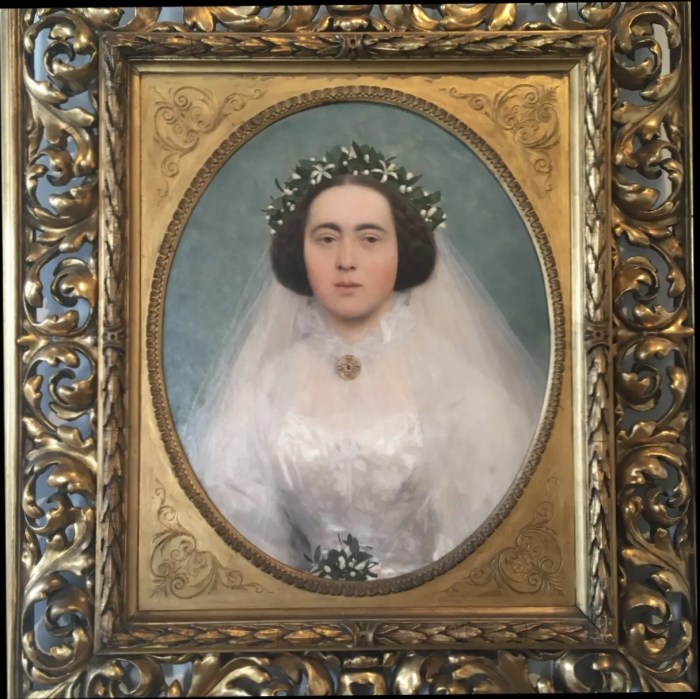
An inscription on the painting’s frame, written by the couple’s daughter, reveals that Klimt had given art lessons to two of the Kerner children—likely influencing the family’s decision to commission the portrait.
Klimt based the composition on a photograph of Marie as a young bride, which he painted over in watercolor. This photograph, along with two others of Marie from the same period, was exhibited alongside the painting, offering rare insight into Klimt’s creative process.
Place in Klimt’s Oeuvre
This portrait belongs to Klimt’s early period, before the emergence of his signature golden phase. It reflects his transition from academic realism to a more personal and symbolic style. The work’s formal tone and historical subject matter align with Klimt’s commissions of the 1890s, particularly his public murals, yet it also hints at the psychological depth and intimacy that would define his later portraits of women.

Leave a Reply