Młoda Polska: Stanisław Wyspiański
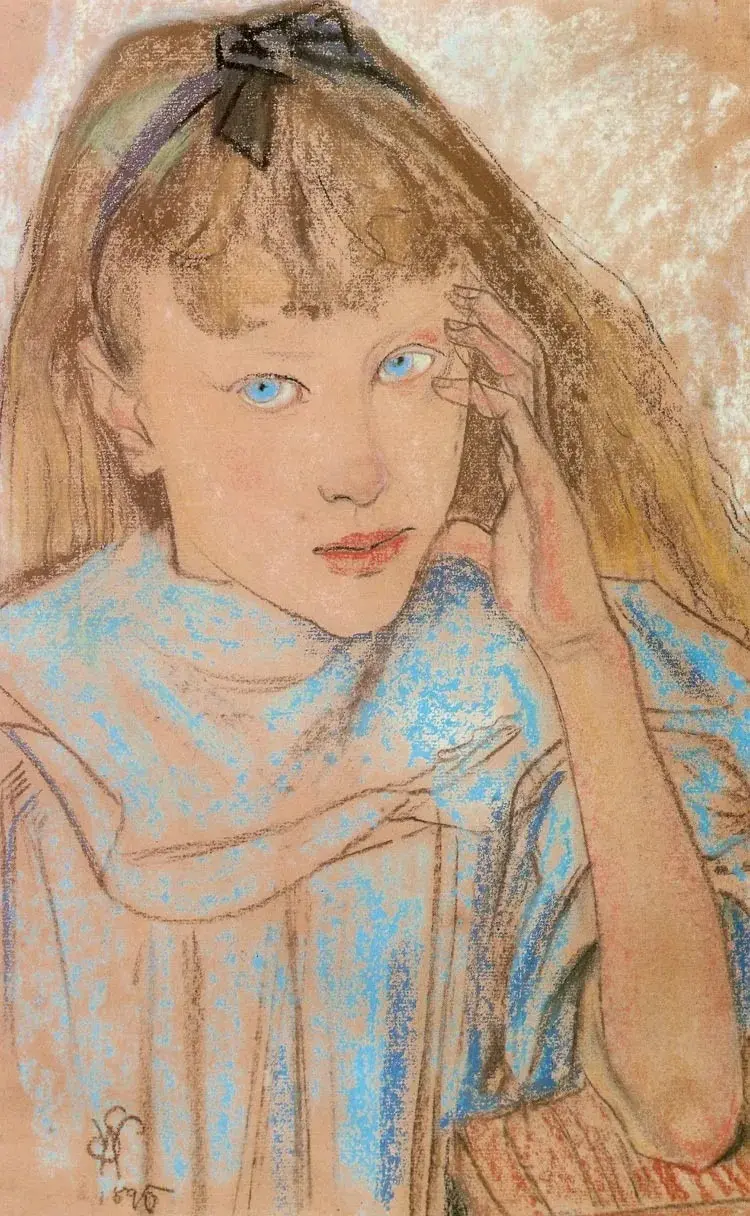
Girl with the Blue Eyes (Dziewczynka z niebieskimi oczami), 1895
Pastel on paper
47 × 29 cm
National Museum in Poznań (Muzeum Narodowe w Poznaniu)
A child’s gaze—clear, unguarded, and quietly haunting—draws us into this intimate pastel from 1895. Stanisław Wyspiański captures not just a likeness, but a moment suspended in time. The soft modeling of the face, the gentle tension in the posture, and the subdued palette all speak to a deep emotional sensitivity. There’s no ornament, no theatrical gesture—just presence, distilled with care.
Stanisław Wyspiański (1869–1907) was one of the most soulful voices of Młoda Polska (Young Poland), a movement that blossomed at the turn of the 20th century as Polish artists sought to break free from academic tradition. They longed for something more personal, more expressive—something that could speak to the spirit of a changing world. In doing so, they found kinship with the broader Secession movements in Munich, Vienna, and Berlin, all of which championed individuality and emotional depth.
Wyspiański’s art is steeped in this spirit of renewal. Trained in Kraków and shaped by his time in Paris, he wove together modernist sensibilities with Polish folklore and a deep sensitivity to human presence. Though he was also a playwright and designer, his portraits—especially of children—reveal a quiet, poetic side of his vision.
Girl with the Blue Eyes, created in 1895, is a tender example of that vision. The child’s gaze is direct yet dreamy, her expression suspended between innocence and introspection. Wrapped in soft tones and gentle lines, she seems to inhabit a world just beyond reach. Wyspiański’s pastel technique lends the portrait a velvety intimacy, as if the viewer has stumbled upon a private moment.
This modestly sized work, housed in the National Museum in Poznań, is more than a portrait—it’s a whisper of emotion, a glimpse into the quiet beauty of everyday life. In capturing the stillness and depth of a child’s gaze, Wyspiański reminds us that art can be both simple and profound. It’s a reflection of Młoda Polska’s deepest aim: to find truth not in grand gestures, but in the delicate poetry of the human soul.


Leave a Reply