Gustav Klimt:
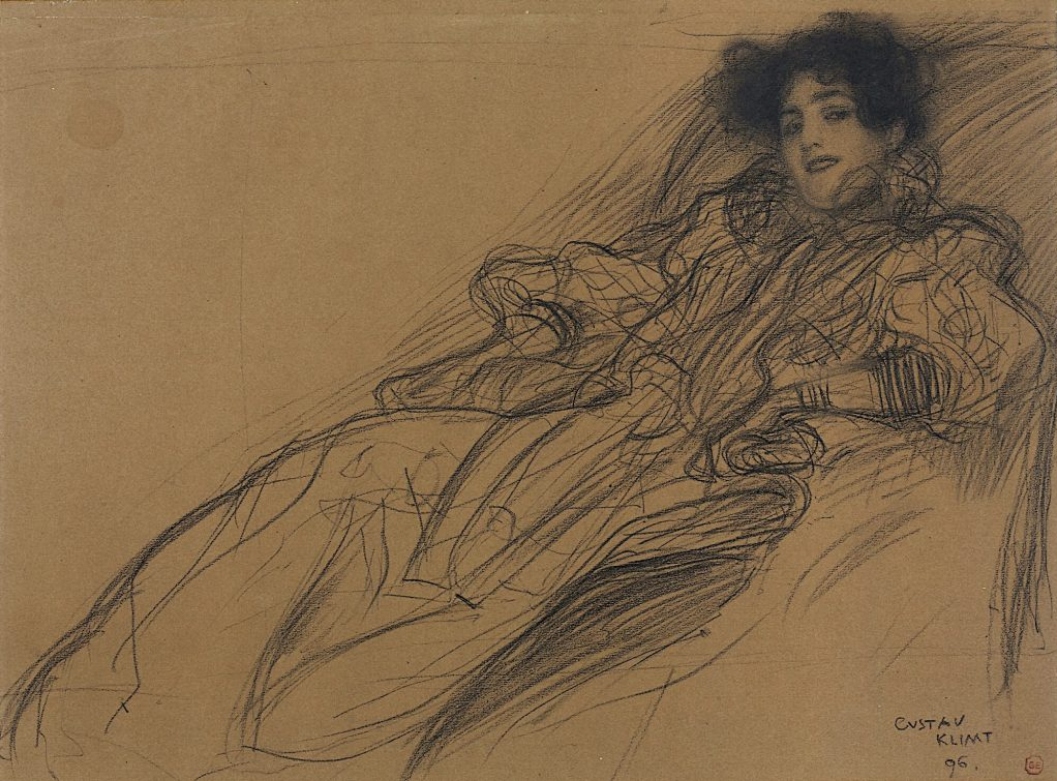
Lady in Morning Garment (Dame im Morgengewande), 1896 Black chalk, white heightening on dark brown paper
28.4 × 38.2 cm
©Stiftung Museum Kunstpalast, Düsseldorf
(Strobl 280)
The drawing shows a young woman in a loose morning garment, her figure emerging quietly from the dark brown paper. Klimt shapes the head with particular attention, giving the sitter a direct outward glance that feels both gently sensual and slightly withdrawn. The rest of the figure is suggested with soft, flowing lines that remain intentionally understated. This balance between a carefully modelled face and a lightly indicated body is typical of Klimt’s early figural studies, made at a moment when he was moving away from historicism and turning toward a more intimate, observational manner.
Around the turn of the century Klimt produced numerous portraits of women, often exploratory sheets that informed later paintings. This drawing belongs to that group and appeared in 1899 in Ver Sacrum, the journal of the newly founded Vienna Secession, under the title Dame im Morgengewande. It reflects Klimt’s interest in the interplay between contour, light and the natural fall of clothing, showing how he used chalk and white heightening to create a quiet, domestic atmosphere without relying on elaborate detail.
The model is not identified in surviving documentation. Klimt frequently drew anonymous women from his surroundings, and no archival material links a specific sitter to Strobl 280. The drawing is therefore regarded as a self‑contained study of an unnamed woman, representative of the exploratory and intimate character of Klimt’s early work.
Leave a Reply