
Wally Neuzil’s Grave in Sinj, Dalmatia (Croatia)
To understand the tragedy of Wally Neuzil (August 18, 1894 – December 25, 1917), you have to strip away the romanticized myths and the dramatic fiction later spun by art critics like Arthur Roessler. The reality was much more cold and transactional. In 1915, Schiele simply chose social status and financial security by marrying the bourgeois Edith Harms. Wally did not belong to his social class, and that was the end of it. Following the permanent rupture of their partnership—which had corporate-level value for Schiele’s early career—Wally left Vienna entirely. She did not retreat into hiding; she trained as an auxiliary nurse, plunging straight into the brutal reality of military hospitals during the final, exhausting years of the First World War.
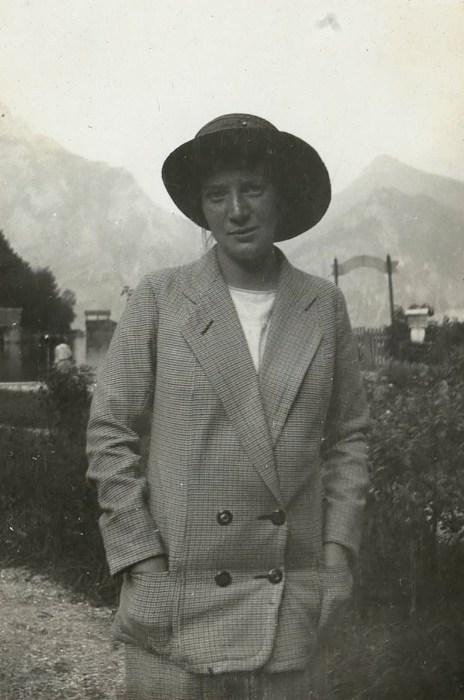
Arthur Roessler during a visit in the Austrian mountains ©Wien Museum

©Leopold Museum
In October 1917, she was deployed to Dalmatia. The remote town of Sinj was no peaceful mountain outpost; it was a makeshift, overcrowded military lazaret operating on the fringes of the Austro-Hungarian monarchy. Wally was thrown into a living hell of dysentery, amputations, and rotting wounds. It was in this chaotic, infection-ridden environment that she contracted scarlet fever. She died on Christmas Day, 1917, at the age of just twenty-three, completely isolated from her past life. Two days later, on December 27, she was buried in a quick, unceremonious wartime burial at the St. Francis Cemetery in Sinj.
Wally was buried in an already existing grave that belonged to an Austrian officer named Lt. Franz Schön, who had been admitted to the same military hospital and died there on August 30 or 31, 1914. Romantic rumors often assume that their shared resting place implies a wartime love affair, but it is historically impossible that Wally and Franz Schön ever met. They were completely strangers, bound together only by the cold, logistical realities of a military cemetery running out of space.
The dark irony of Wally’s story lies in the grotesque contrast between her final resting place and the international art market. While the Leopold Museum fought international legal battles over her image—with the iconic Portrait of Wally eventually being ransomed for a staggering 19 million dollars in 2010—her actual physical body lay in absolute, anonymous oblivion. For nearly a century, her grave was completely lost to history. People literally walked over her remains without a clue who she was, as the site suffered decades of total neglect, shifting stones, and faded inscriptions.
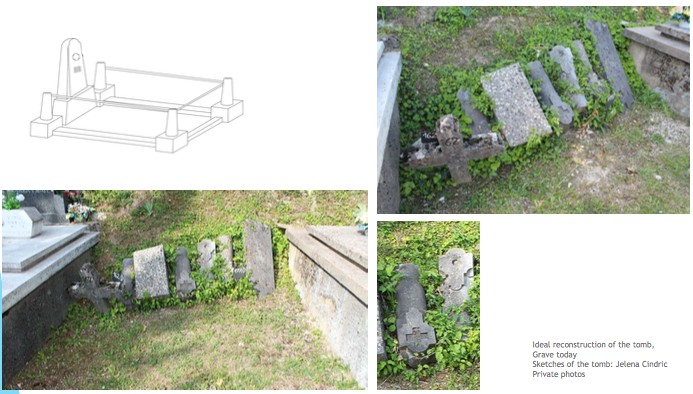
©Wally Neuzil society

project ©Wally Neuzil society
The grave was only rediscovered in late 2015 after intense archival detective work by Austrian and Croatian researchers. To mark the 100th anniversary of her lonely death in 2017, the Wally Neuzil Society stepped in to finally give her the dignity that the art world had exploited for millions.
They reconstructed the collapsed site, replaced the damaged stone, and made sure her name could be read clearly among the cypresses. It stands as a sober, heavy reminder of a young woman who was consumed by the Vienna avant-garde but met her end in brutal wartime service.
A big thank you to the Wally Neuzil Society for some of the details and the photographs. Do visit their site! Wally Neuzil Society


Leave a Reply