Finnish Modernism: Helene Schjerfbeck
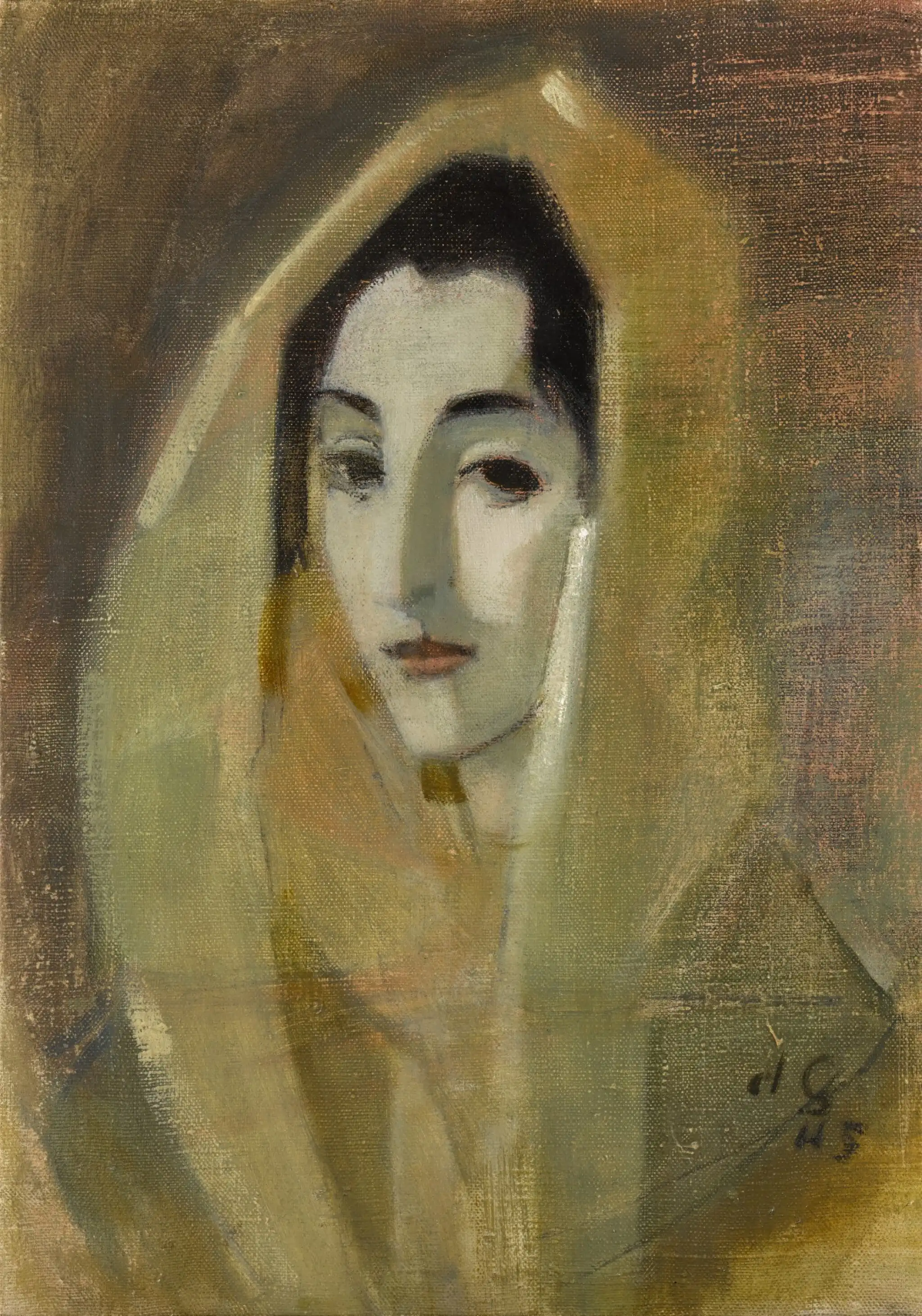
Spanish Girl, circa 1928
Oil on canvas
49 × 34.3 cm (19¼ × 13½ in)
Auctioned at Sotheby’s in 2022 for 942,500 GBP
Spanish Girl, painted around 1928, is one of the clearest examples of how deeply Schjerfbeck absorbed and transformed the art of El Greco. The original El Greco painting — a veiled female portrait from the late 16th century — appears in August Mayer’s 1911 monograph, the very source Schjerfbeck used for this reinterpretation. Although she saw only one authentic El Greco painting in person — and another she suspected was a forgery — the encounter stayed with her. As noted in the Sotheby’s auction text, she wrote in 1905 to her friend Maria Wiik that she wished she could “make up El Greco’s palette: white, black, yellow ochre, and cinnabar,” a remark that shows how strongly she responded to his dramatic contrasts and psychological depth.
Schjerfbeck admired El Greco’s ability to focus attention on the face and to reach what she called the “deep layers of the soul.” Sometimes she drew on his example to express inner strain or neurasthenia — a term widely used at the turn of the century for states of mental exhaustion. In Spanish Girl, however, the mood is gentler. The sitter’s inward, steady gaze carries a sense of calm and tenderness. As the auction note observes, the expression has a quiet, quasi‑religious tone, reminiscent of a benevolent Madonna — a way of touching something innermost and human.
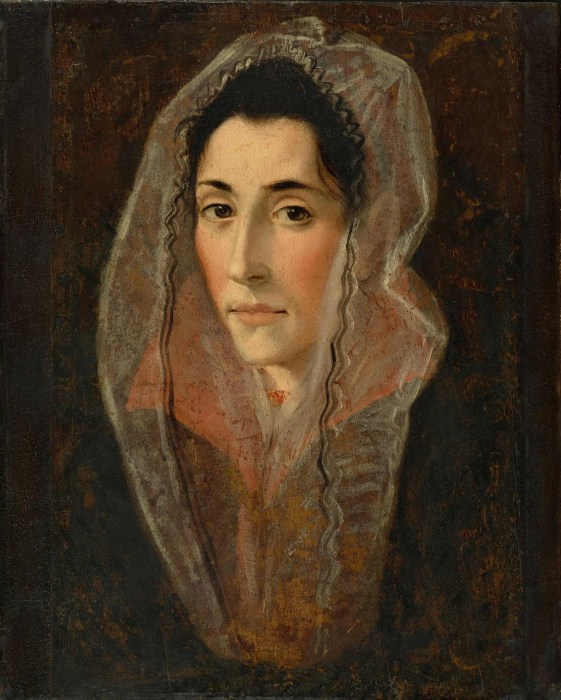
The painting is based on a black‑and‑white reproduction of an El Greco portrait she found in August Mayer’s 1911 monograph, a book she owned and returned to often. The work later remained for many years in the family of her cousin Johan Lupander — whose children, including Esther of Dancing Shoes fame, sat for Schjerfbeck — before passing through Bukowski’s in 2010 and Åmells in Stockholm. In this version, Schjerfbeck softens the original’s angularity and drama, replacing it with a veil of quiet introspection. The palette is reduced to earthy ochres, pale greens, and warm browns, and the face emerges gently from the surrounding tones, as if lit from within.
The result is a portrait that feels both intimate and timeless — a conversation across centuries, shaped by Schjerfbeck’s lifelong search for simplicity, clarity, and emotional truth. It also reflects the quiet refinement of her late‑1920s style, where form and feeling are pared down to their essentials.


Leave a Reply