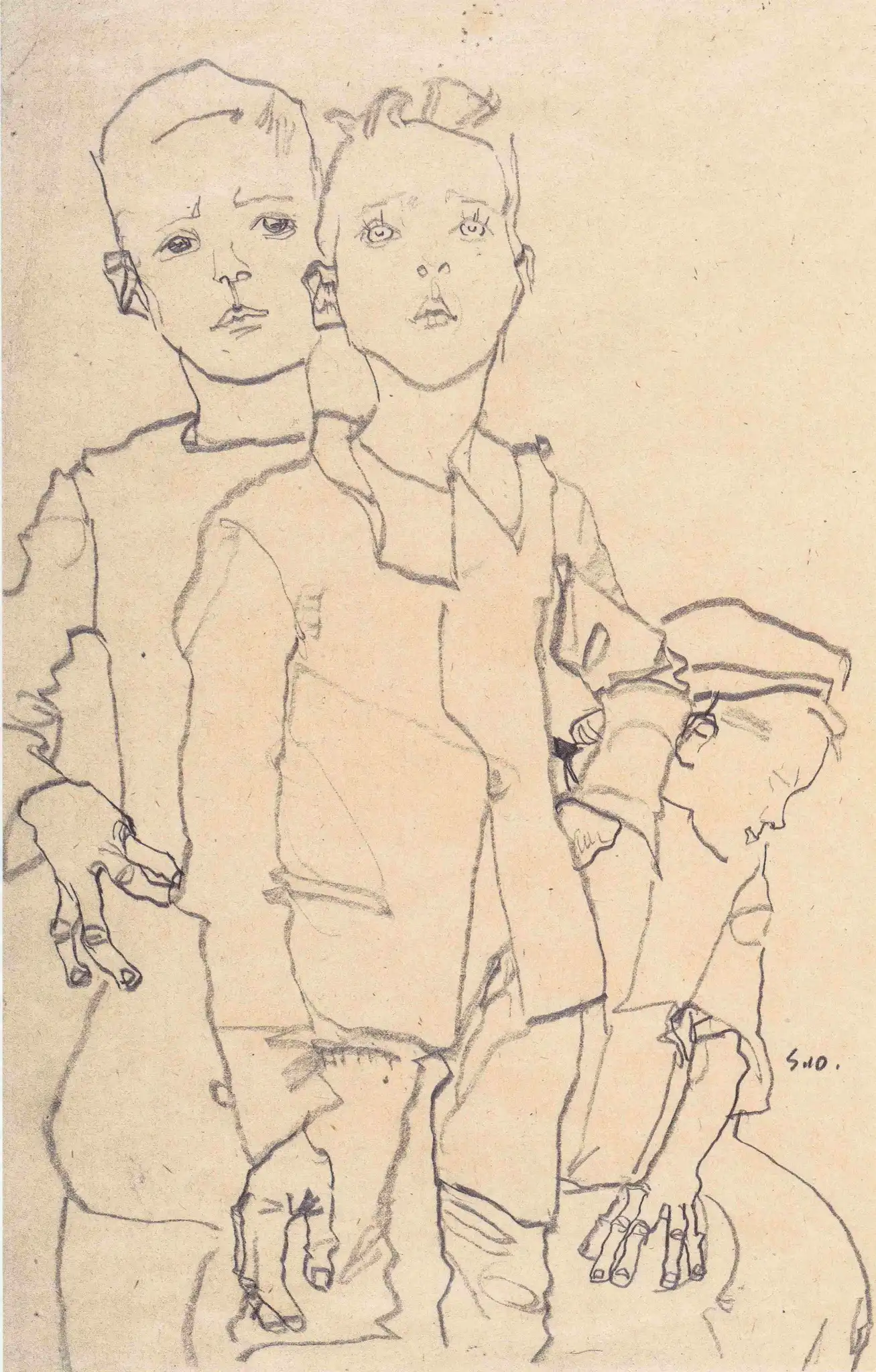
Egon Schiele:
Three Street Urchins (Drei Straßenkinder), 1910
Pencil
44.6 × 30.8 cm
© Albertina, Vienna
(Kallir d461)
Children were frequent models in Schiele’s early drawings. Vienna at the turn of the century was a city of glittering cafés and imperial ceremony, but also of overcrowded working‑class districts where children spent more time on the streets than at home. Many drifted between school, odd jobs, and sheer survival. Schiele’s studio — most likely the modest room he occupied on Wasagasse in Vienna’s 9th district — became an unexpected stopping place for some of them, a place where they could warm up, rest, and simply exist without being chased away.
Paris von Gütersloh — a painter, writer, and one of Schiele’s closest early companions — later recalled that there were almost always children around. They wandered in from the street, curious or hungry or simply exhausted. Some washed their faces at the basin, though most didn’t bother. They curled up in corners, slept off the day’s fatigue, recovered from rough treatment at home, or sprawled out with the unselfconsciousness of those who have never been granted privacy. Schiele, barely twenty himself, treated them with a rough but unmistakable kindness: he fed them when he could, let them sleep without question, and drew them whenever they were willing to sit still long enough.
The children, for their part, were utterly untroubled by the moral anxieties of imperial Vienna. They dressed and undressed without ceremony, played, argued, relieved themselves when needed, and moved through the studio with the freedom of creatures who had learned early not to expect gentleness from the world. In Schiele’s presence they found someone who did not scold or shame them — someone who, for a few hours, allowed them to be children rather than nuisances.
Schiele was drawn to unguarded states, to people as they were when the world wasn’t watching. His line in these drawings is quick, searching, and empathetic — capturing the slump of tired limbs, the wary glance, the sudden spark of mischief. He didn’t idealize these children; he recorded their resilience, their fragility, and the small, stubborn dignity of those who had already learned too much about life.
Three Street Urchins belongs to this world. It carries the warmth of those brief encounters: the trust that flickered up between a young artist and the children who wandered into his studio, the quiet refuge they found there, and the fleeting moments of rest and recognition that passed between them before they slipped back into the streets of Vienna.

Leave a Reply