
Gustav Klimt:
Head of a Child, front (1895)
Pencil on paper,
44 × 31 cm
© Albertina, Vienna
(Strobl s261)
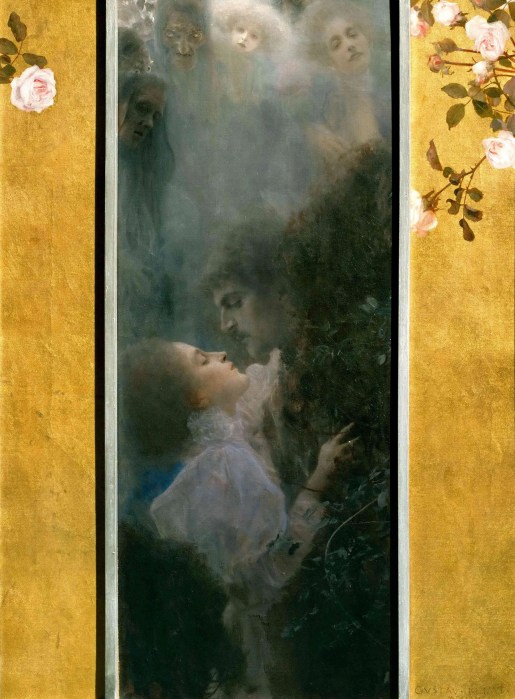
This drawing is a preparatory study for Klimt’s allegorical painting Love (1895), where figures of youth, adulthood, and old age embody the cycle of human existence. The child’s head, barely visible at the edge of the canvas, tempers the allegory’s intensity with a note of innocence.
In the drawing, however, the child is given full presence. Klimt’s pencil lines are delicate yet assured, capturing the roundness and vulnerability of youth. Without ornament or gilding, the study reveals the artist’s sensitivity to fragile human detail.
Created in 1895, this sheet belongs to a pivotal moment in Klimt’s career, when he was moving from decorative commissions toward allegorical symbolism. It shows how his monumental visions were grounded in intimate sketches — quiet rehearsals that carried emotional weight even when relegated to the margins of a finished painting.
The Albertina’s collection of Klimt drawings allows us to glimpse these foundations. Each sheet is a fragment of process, a rehearsal of gesture and contour. In Head of a Child, the gaze is direct, almost searching, and it reminds us that Klimt’s allegories were never only about grandeur or sensuality. They were also about the fleeting, vulnerable presences that give human life its balance.
Seen today, the drawing resonates beyond its preparatory function. It is both a document of Klimt’s working method and a standalone meditation on innocence. The child’s face, isolated on paper, becomes a symbol of quiet endurance — a reminder that even the smallest figure can carry profound emotional weight in the artist’s vision.

Leave a Reply