The Finnish Connection: Helene Schjerfbeck
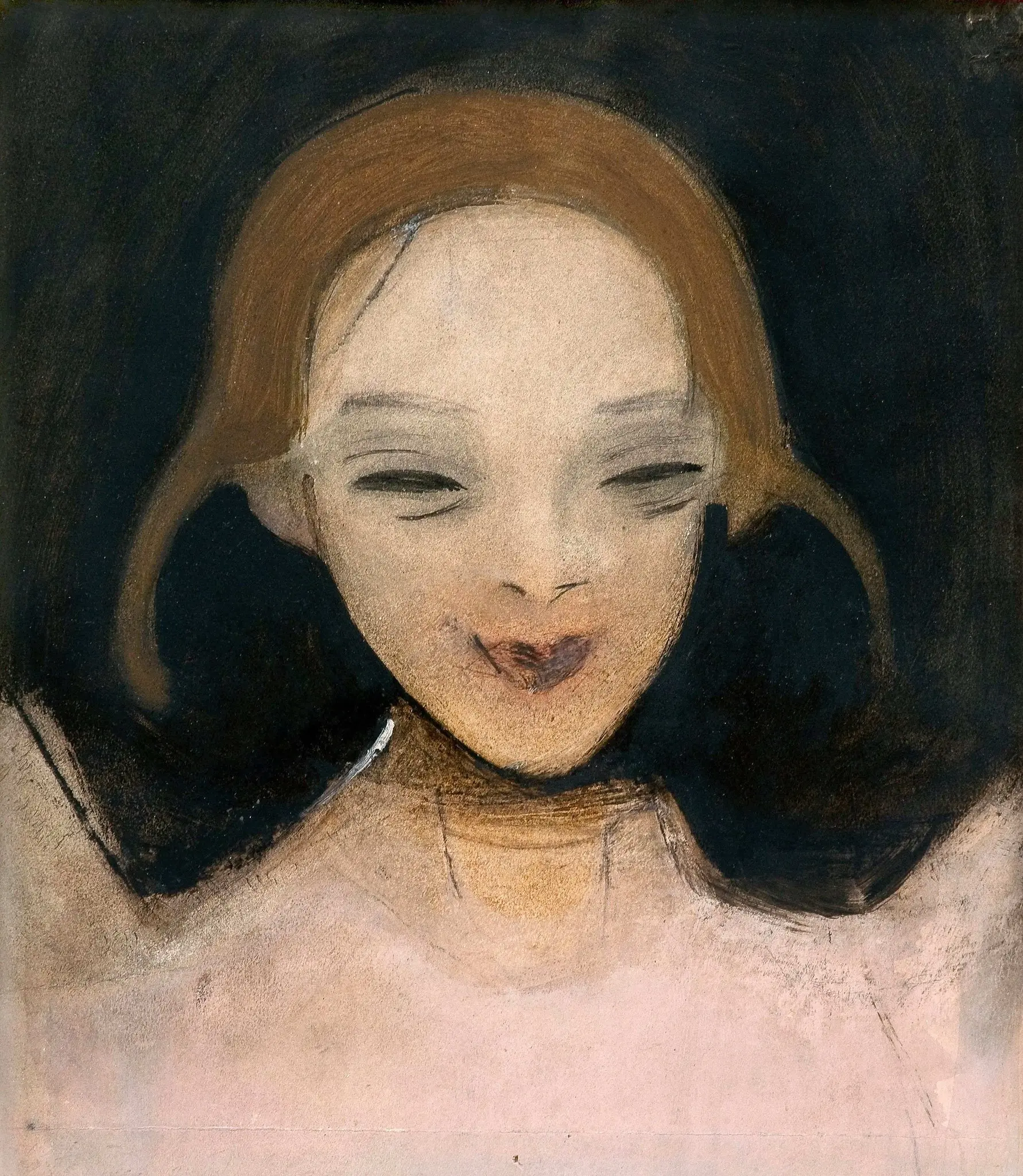
Smiling Girl (Hymyilevä Tyttö), 1921
Oil and mixed media on paper
32 × 27.5 cm (12.6 × 10.83 in.)
Sold at Bukowskis in 2011 for € 300,000
Katri Mäkinen (1910–1989, later Lindholm) was the youngest child of blacksmith Juho Kustaa Mäkinen, once known by the surname Sahrman. Helene Schjerfbeck (1862–1946) first painted her in 1913, together with her sister Martta. That portrait began a long relationship: for more than ten years, the four Mäkinen children were woven into Schjerfbeck’s daily life and art.
The children were not only models but helpers. Elma, Martta, and Katri kept the house in order and fetched meals from the railway station restaurant, while their brother Einari—nicknamed “the firewood boy”—supplied chopped wood. Katri, living just across the garden fence, was the easiest to call upon. She later remembered being paid one Finnish mark per hour, remarking with a smile: “All I had to do was look like an angel.” Schjerfbeck’s fascination with Katri endured, and even in 1945, the year before her death, she revisited earlier portraits of the girl, distilling them into the pared‑down style of her late period.
Schjerfbeck had moved to Hyvinkää in 1902 and remained there for more than two decades. The small railway town offered solitude and modest surroundings, yet it became the setting for her most important portraits of women and children. Many of her models were neighbors, ordinary people whose faces she transformed into timeless images. These Hyvinkää works are now recognized as central to her reputation: portraits stripped of ornament, reduced to essential form, and charged with psychological depth. Through them, Schjerfbeck emerged as one of Finland’s leading modernists.
Painted in 1921, Smiling Girl (Hymyilevä Tyttö) shows how she balanced innocence with modernist clarity. The small paper support, worked in oil and mixed media, allowed her to combine delicacy with precision. The portrait’s quiet smile and simplified contours reveal her gift for turning everyday encounters into images of lasting resonance.
Nearly a century later, in 2011, Smiling Girl crossed into the international art market, selling at Bukowskis for € 300,000. The strong result underscored how Schjerfbeck’s Hyvinkää portraits—once intimate exchanges between artist and child—have become prized modernist treasures. Collectors value them not only for their rarity but for the distilled intensity that defines her mature style.
The bond between Schjerfbeck and the Mäkinen family shows how art can grow from ordinary circumstances. A neighbor’s child, a garden fence, the rhythm of household chores—all became material for portraits that continue to speak across generations. Through Katri’s “angelic” presence, Schjerfbeck found a muse who helped shape some of the most enduring images of Finnish modernism.


Leave a Reply to honestlyc395a05dd0Cancel reply