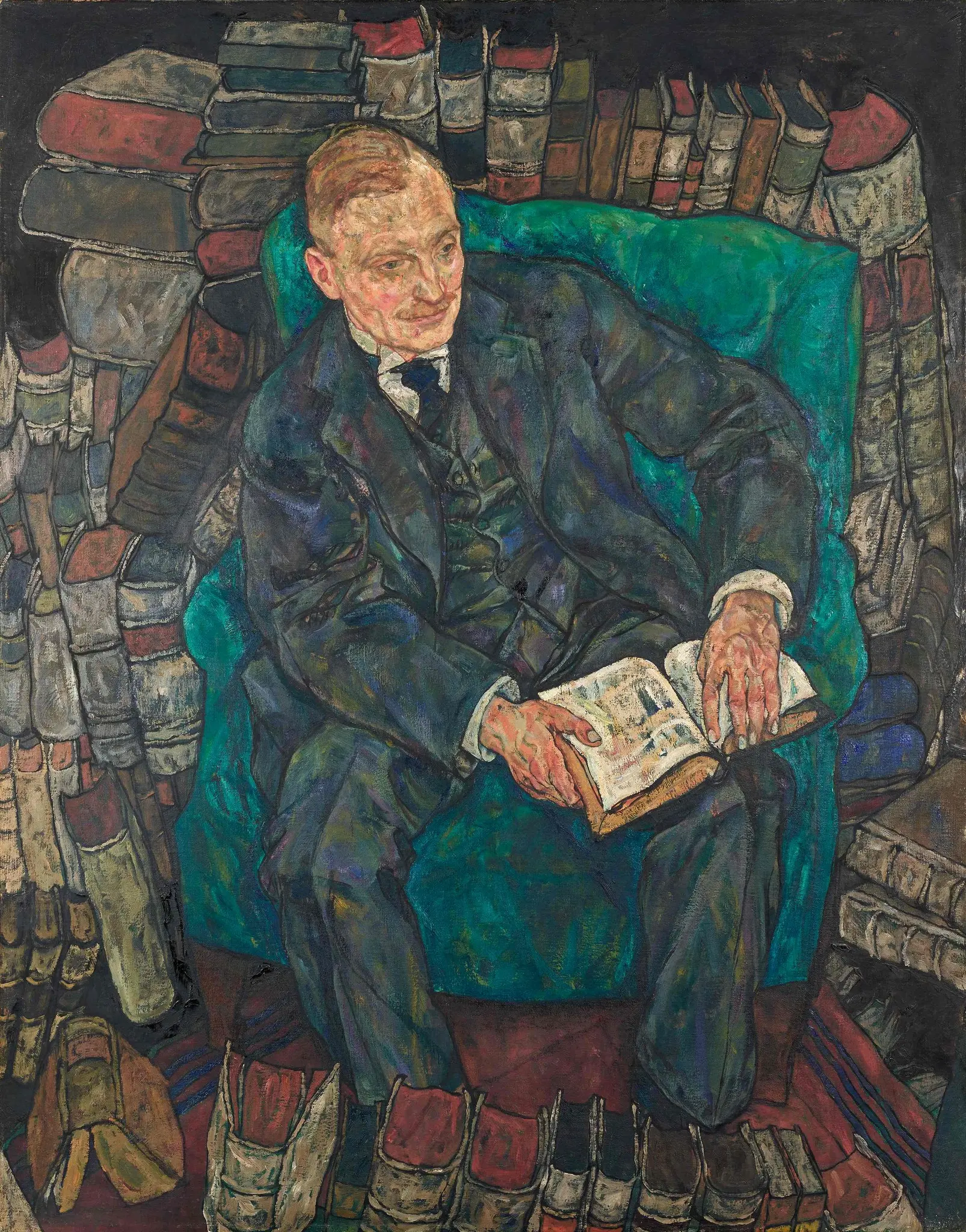
Egon Schiele:
Portrait of Dr. Hugo Koller, 1918, (Bildnis Dr. Hugo Koller)
Oil on canvas
140.3 × 109.6 cm (55 ¼ × 43 ⅛ in)
© Belvedere, Vienna
(Kallir P320)
Painted in the final months of Egon Schiele’s life, this portrait of Dr. Hugo Koller radiates quiet dignity. Koller — a scholar and industrialist — was married to the painter Broncia Koller-Pinell, and together they were part of Vienna’s vibrant cultural scene. Their summer home in Oberwaltersdorf offered a peaceful refuge for artists, and Schiele spent time there in August 1918. Yet the portrait was likely completed earlier, in May or June, when Schiele was still working steadily despite the growing shadow of war and illness.
Rather than placing Koller in his usual studio setting, Schiele chose a more personal approach. He painted him seated in a padded armchair — a deliberate choice that speaks volumes. The soft lighting, warm tones, and subtle background details suggest a cultivated, bookish environment. It’s a space that feels lived-in, thoughtful, and deeply human.
Koller’s posture is upright, his gaze direct but calm. There’s a quiet alertness in his expression, as if he’s listening more than posing. Schiele’s brushwork is measured and precise, with none of the distortion or rawness seen in his earlier portraits. This shift reflects a broader change in Schiele’s style during 1918 — a move toward psychological depth and compositional clarity.
The painting carries a gentle gravity. Schiele, just months away from his untimely death, seems to have poured a sense of stillness into the canvas. It’s not mournful, but reflective — a moment of connection between two men, captured with empathy and restraint.
Biographical and compositional details referenced from Jane Kallir, Egon Schiele: The Complete Works, Catalogue Raisonné (1985).


Leave a Reply