Egon Schiele:
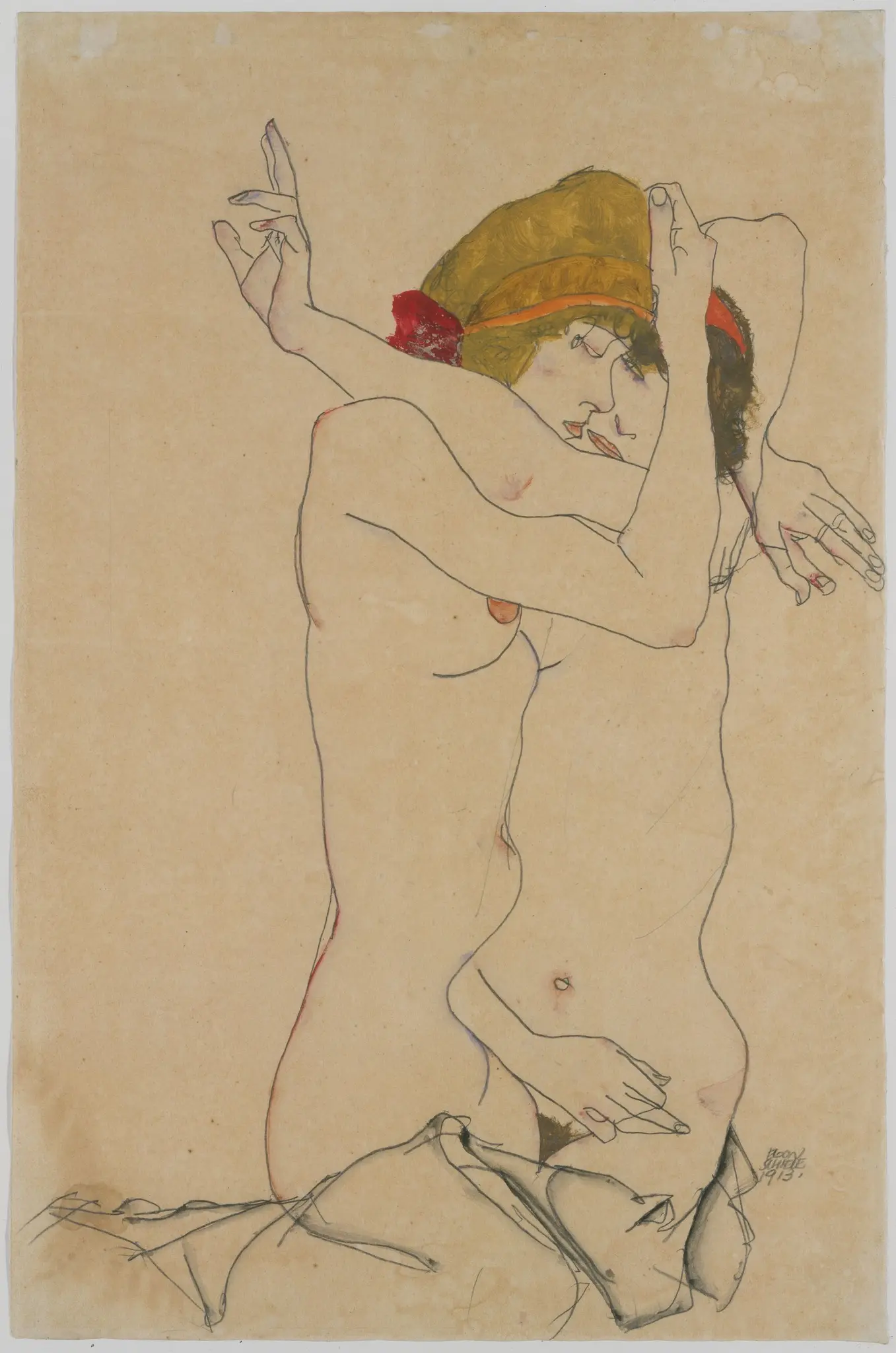
Two Women Embracing (1913) – (Zwei sich umarmende Frauen)
Gouache, watercolor, and graphite on paper
47.6 x 31.8 cm (18 3/4 x 12 1/2 in.)
© The Metropolitan Museum of Art (The MET), New York
(Kallir d1283)
In Two Women Embracing, Egon Schiele offers a deeply personal glimpse into human connection, rendered with his unmistakable style. Created in 1913—a formative year in his artistic journey—the piece combines gouache, watercolor, and graphite to produce a composition that is both delicate and emotionally charged.
The two figures, nude and intertwined, seem suspended in a moment that resists easy interpretation. Their embrace is intimate, yet not overtly romantic. There’s a quiet tension in the way their bodies fold into one another, suggesting comfort, dependence, or perhaps shared vulnerability. Schiele’s lines are sharp and deliberate, emphasizing the contours of the human form without idealizing it. His use of color is restrained but effective, allowing the emotional weight of the scene to take center stage.
Rather than placing the figures in a defined setting, Schiele leaves the background bare, drawing all attention to the relationship between the women. This choice heightens the psychological intensity of the work, a hallmark of Schiele’s approach during this period. He was less concerned with realism and more interested in capturing the inner world—desire, isolation, tenderness, and unease.
The drawing was made during a time when Schiele’s life was marked by controversy and introspection. His art often challenged social norms, and this piece is no exception. It invites viewers to sit with ambiguity, to feel rather than to judge.
Now part of the collection at The Metropolitan Museum of Art in New York, Two Women Embracing continues to resonate with audiences for its raw honesty and emotional depth. It’s a quiet but powerful reminder of how art can speak to the complexities of human relationships without saying a word.


Leave a Reply to scarlettscastleCancel reply