The Hungarian Connection/The Eight: Róbert Berény
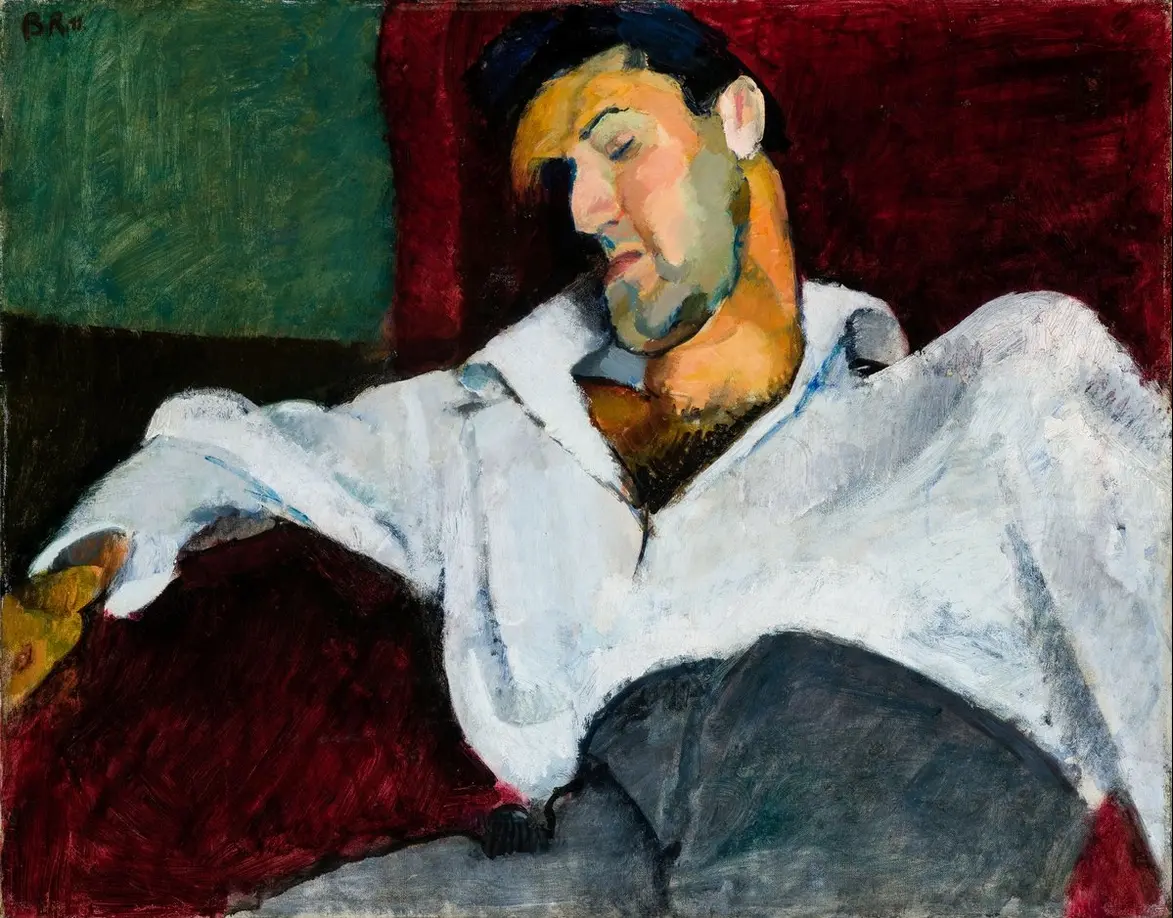
Portrait of Leó Weiner (1911) – Róbert Berény
Oil on canvas
63 × 79 cm
©Hungarian National Galery, Budapest
The subject of this painting, Leó Weiner (1885–1960), was a prominent Hungarian composer and one of the foremost music educators of the early twentieth century. As a professor at the Franz Liszt Academy of Music, Weiner shaped generations of Hungarian musicians, emphasizing chamber music and classical traditions even as modernist currents gained ground.
This portrait was painted by Róbert Berény (1887–1953), a leading figure in Hungary’s early avant-garde movement. Berény’s modernist approach lends expressive depth to the depiction of Weiner, capturing both his intellectual intensity and quiet dignity. The composition’s angular forms and subtle palette reflect Berény’s Cubist influences, while the introspective gaze suggests a psychological acuity befitting the sitter’s musical legacy.
Berény was a founding member of The Eight (A Nyolcak), a pioneering group of artists who introduced modernist styles such as Cubism and Expressionism to Hungarian art. Born in Budapest, he studied at the Pattern Drawing School before continuing his education in Paris, where he was influenced by the Fauves and other avant-garde artists—an experience that helped shape his distinctive style.
In 1911, Berény joined The Eight, alongside artists including Károly Kernstok, Lajos Tihanyi, and Béla Czóbel. The group played a pivotal role in transforming the Hungarian art scene by embracing and promoting modernist techniques and ideas. Their first exhibition in 1909 marked a significant turning point in the development of Hungarian modernism.
Berény’s work is characterized by bold color palettes, dynamic compositions, and a synthesis of Cubist and Expressionist elements. He excelled in portraiture and still life, often experimenting with light and shadow in striking and innovative ways.


Leave a Reply to FrAline75Cancel reply