The Berlin Secession: Käthe Kollwitz
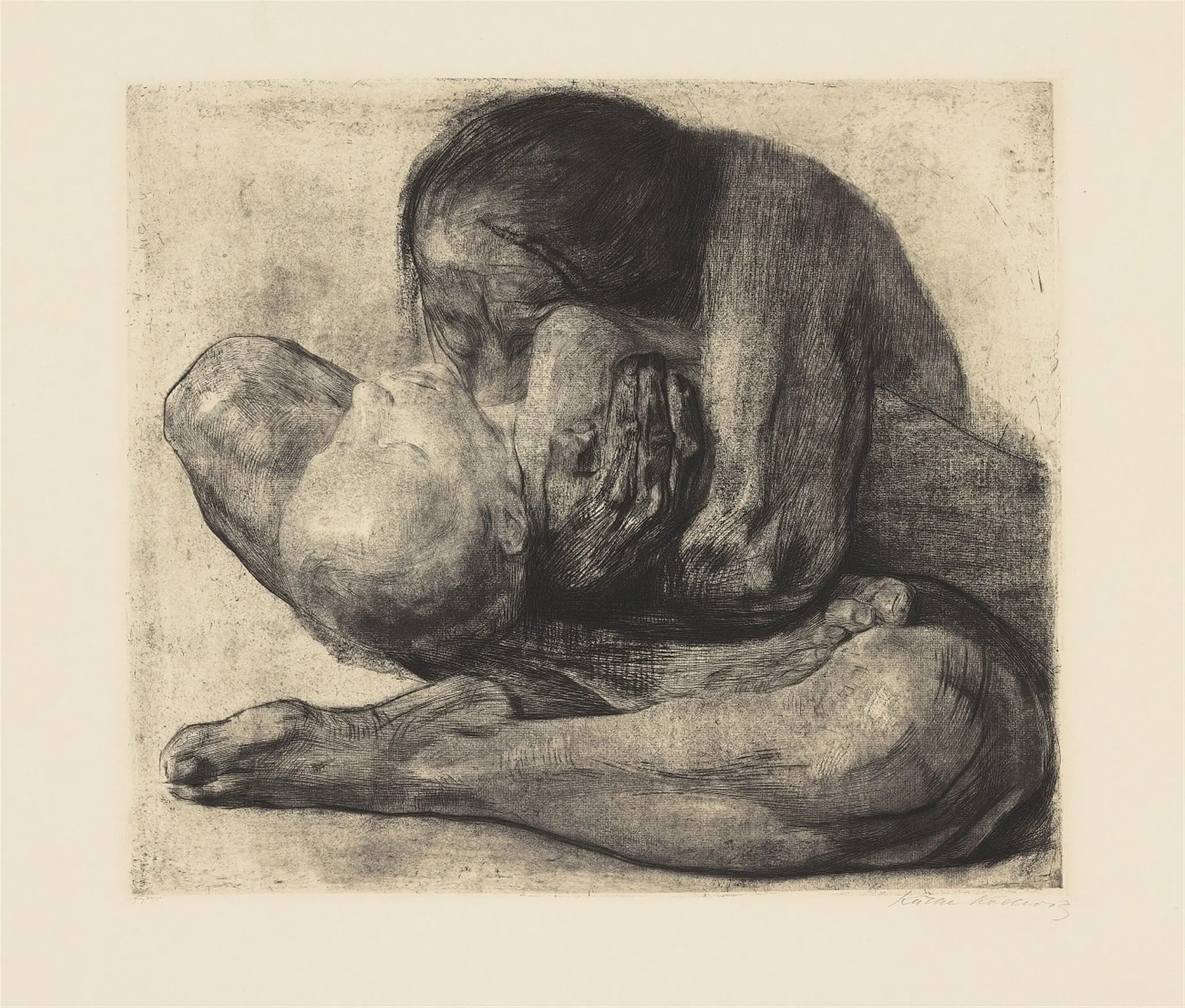
Woman with Dead Child (‘Frau mit totem Kind’, 1903) – Käthe Kollwitz
Line etching, drypoint, emery and vernis mou with print of ribbed laid paper
58,5 × 68 cm
©Albertina, Vienna
“Frau mit totem Kind” (Woman with Dead Child) is a poignant etching by Käthe Kollwitz . It shows a mother holding her dead child, capturing deep grief and maternal love. Kollwitz used herself and her seven-year-old son Peter as models, sketching in front of a mirror.
The piece explores social issues and human suffering, influenced by Kollwitz’s time in a poor area of Berlin with high disease and infant mortality rates. The raw emotion and intensity make it one of her most famous works, reflecting her empathy and focus on the struggles of the marginalized.
Käthe Kollwitz (1867-1945) was a notable figure in the Berlin Secession movement and is mainly remembered as an expressionist artist. She studied art in Munich and Berlin during a time when it was tough—and often impossible—for women to pursue a career in art. Kollwitz is best known for her etchings and lithographs, with expressionism deeply influencing her later work. War and poverty are central themes in Kollwitz’s art, often depicting women mourning their dead children—a personal tragedy she experienced when her son was killed in WWI. Her unflinching portrayal of human suffering served as a powerful critique of social conditions in Germany. In 1936, the Nazis condemned her art as “degenerate,” removing her works from museums. She faced frequent threats of arrest and deportation by the Gestapo. Kollwitz passed away just 16 days before the end of WWII.
Leave a Reply